
Quantum-Probe Microscopy News
Nuclear magnetic resonance of a single atom with STM
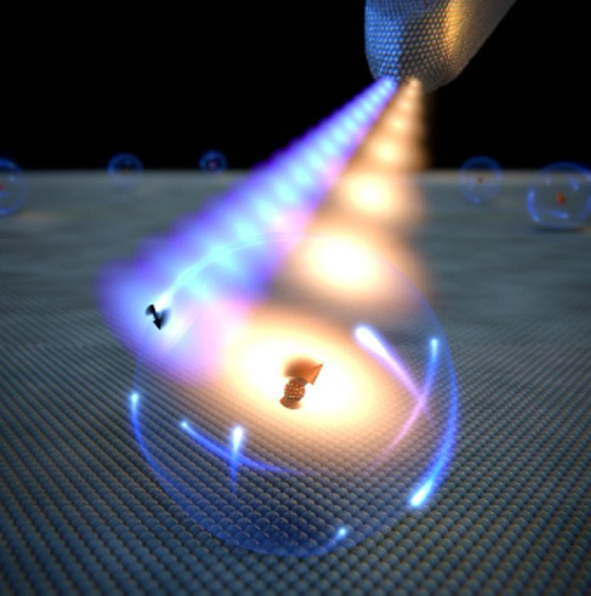
24th October, 2026: In a new study published in Nature Communications, nanoGUNE researchers Cristina Mier and Leonard Edens, together with colleagues from Delft University of Technology, demonstrate nuclear magnetic resonance on a single titanium atom using STM. This breakthrough opens new possibilities for controlling individual nuclear spins in quantum technologies.
Publication: Nuclear magnetic resonance on a single atom with a local probe — Nature Communications (2026).
Topological Edge States in Molecular Haldane Chains
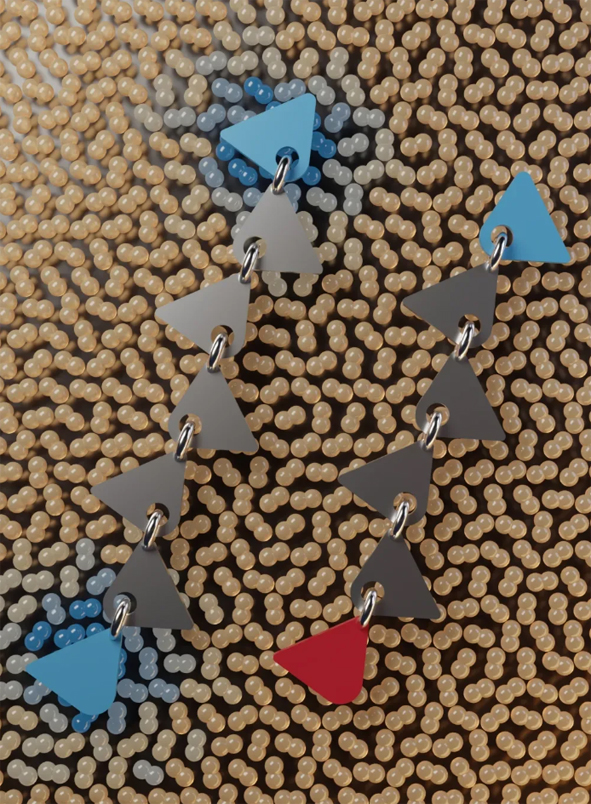
14th October, 2026: In a new study published in Nature, researchers from CIC nanoGUNE and their collaborators investigate topological quantum states in molecular spin chains coupled to a superconductor. Using scanning tunnelling microscopy, they reveal how the chain's parity determines the interaction of its topological edge states with superconductivity, opening new opportunities to explore quantum magnetism and topological quantum technologies.
Publication: Parity-dependent coupling of topological edge states to a superconductor in molecular Haldane chains — Nature (2026).
Control of Parity and Charge in Nanoscale Superconducting Islands
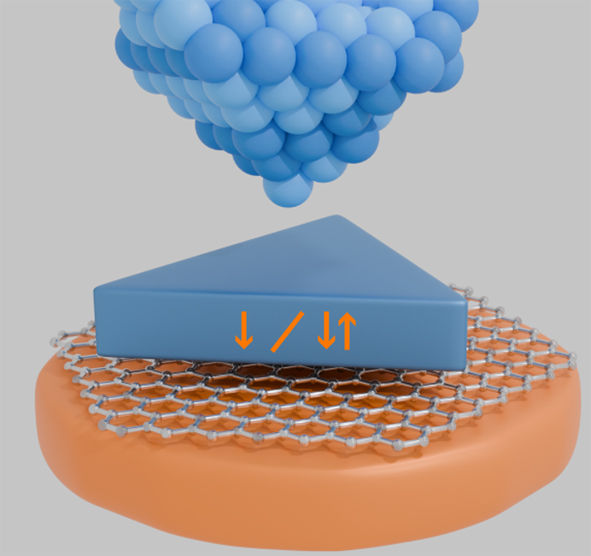
24th November, 2025: In a recent study published in Physical Review Letters, researchers from CIC nanoGUNE, the Materials Physics Center and Universidad Autónoma de Madrid investigate the competition between superconductivity and Coulomb blockade in nanoscale lead islands. Using scanning tunnelling microscopy, they demonstrate how charge and electron parity can be controlled at the atomic scale, opening new possibilities for superconducting quantum devices.
Publication: Local Control of Parity and Charge in Nanoscale Superconducting Islands — Physical Review Letters (2025).
From Local to Collective Superconductivity in Graphene
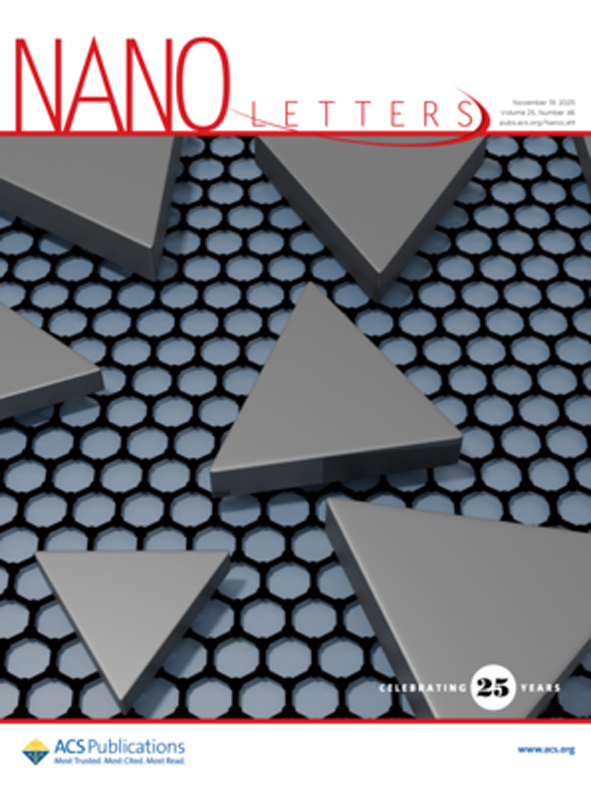
20th October, 2025: In a new study published in Nano Letters, we investigated how superconductivity can be induced in graphene by nanoscale lead islands. Using scanning tunnelling microscopy, we demonstrated how the properties of the graphene–superconductor interface determine whether superconductivity remains localized around individual islands or develops into a collective state, opening new possibilities for engineering superconducting quantum devices.
Publication: From Local to Collective Superconductivity in Proximitized Graphene — Nano Letters (2025).