Nanomagnetism News

Últimas noticias

  • A new ultra-compact sensor paves the way for more powerful and scalable silicon quantum processors

    Researchers from the Quantum Hardware group at CIC nanoGUNE, in collaboration with the British company Quantum Motion, have demonstrated an advanced readout sensor for spin qubits that, while being more compact that previous designs, can reach the level of readout precision needed to...

  • El proyecto TextaDNA avanza en el almacenamiento de datos mediante fibras poliméricas basado en ADN

    El proyecto TextaDNA, financiado por el programa EIC Pathfinder y coordinado por CIC nanoGUNE, avanza de manera constante en su misión de desarrollar una nueva generación de almacenamiento de datos basado en ADN integrado en fibras poliméricas.  En colaboración con Eurofins Genomics, multinacional con sede en...

  • COMPUTACIÓN CUÁNTICA Y TRADICIONAL: LA ALIANZA QUE ACELERA EL FUTURO

    Este nuevo proyecto de CIC nanoGUNE consiste en adaptar el programa SIESTA, uno de los códigos más extendidos para estudiar cómo se comportan los materiales a escala nanométrica, a flujos de trabajo híbridos que integran computación clásica y computación cuántica. Esta hibridación de...

  • Industria, instituciones e investigación convergen en San Sebastián para avanzar en la capacidad cuántica

    Más de 100 agentes internacionales exploran el camino desde la investigación cuántica hasta la aplicación industrial dentro del ecosistema vasco. El evento Quantum Readiness for Business muestra la estrategia, la infraestructura de vanguardia y las oportunidades de colaboración del País...

  • Manuel Suárez receives the 2025 GEFES Award for Best Experimental Thesis

    The Spanish Group of Condensed Matter Physics (GEFES), part of the Royal Spanish Society of Physics, has awarded the 2025 Prize for Best Experimental Doctoral Thesis to Manuel Suárez Rodríguez, who carried out his PhD within the Nanodevices Group at CIC nanoGUNE, under the co-supervision of Ikerbasque Research...

  • Mariana Medina-Sánchez: “La convergencia de la microrrobótica, los nanobiosensores y la inteligencia artificial está transformando los tratamientos de reproducción asistida”

    La investigadora Ikerbasque Mariana Medina-Sánchez, líder del grupo de Nanobiosistemas de CIC nanoGUNE, expone en un artículo publicado en Nature Nanotechnology su visión sobre los importantes avances que está experimentando la medicina reproductiva. Un ejemplo destacado de estos...

  • Overcoming symmetry limits in photovoltaics through surface engineering

    A recent study published in Physical Review Letters and carried out by researchers from EHU, the Materials Physics Center, nanoGUNE, and DIPC introduces a groundbreaking approach to solar energy conversion and spintronics. The work tackles a long-standing limitation in the bulk photovoltaic effect—the need for non-...

  • Researchers Observe Flat-Band Ultrastrong Coupling

    Researchers from CIC nanoGUNE, in collaboration with the Donostia International Physics Center (DIPC) and the Center for Materials Physics (CFM), have experimentally observed and theoretically verified flat-band ultrastrong coupling between optical phonons and surface plasmon polaritons....

  • Fernando González Zalba recibe la competitiva ayuda ERC Consolidator Grant

    El proyecto QuDos se centrará en utilizar puntos cuánticos como base para desarrollar una electrónica de control por microondas completamente nueva y de ultra bajo consumo. La investigación se llevará a cabo en el marco del acuerdo de colaboración que mantienen CIC nanoGUNE y Quantum Motion.

  • Rapid fabrication of self-propelled, steerable magnetic microcatheters for precision medicine

    A new international study led by the Nanobiosystems group at CIC nanoGUNE, is developing miniature, non-invasive, precise robotic catheters for use in reproductive medicine and gynaecological health. This research, which was recently published in the prestigious journal Advanced Materials...

  • El EIT Jumpstarter premia el proyecto empresarial Prospect Biotech de CIC nanoGUNE

    La nueva empresa, que se constituirá en diciembre, optimizará los cultivos celulares combinando espectroscopía Raman, nanopartículas e inteligencia artificial. Esta tecnología permite la detección temprana de anomalías en los cultivos y mayor eficiencia para acelerar tratamientos contra el cancer como CAR-T.

  • Beatriz Martín García receives one of the 2025 Journal of Materials Chemistry Lectureship runner-up awards

    Beatriz Martín García, Ikerbasque Research Fellow & Ramón y Cajal Fellow at CIC nanoGUNE, has been selected as one of the runners-up of the Journal of Materials Chemistry Lectureship 2025. This award recognizes her remarkable contributions to materials chemistry and the scientific...

  • "LA NANOTECNOLOGÍA PROMETE IMPORTANTES AVANCES EN MEDICINA"

    Entrevista con Mariana Medina-Sánchez, Líder del grupo de Nanobiosistemas, con motivo de la edición del Informe de Actividades 2023-2024.

  • Milla Cuántica: un recorrido por la investigación en física cuántica en Donostia

    Donostia cuenta desde hoy con una ruta científico-tecnológica que puede explorarse a pie o de forma virtual. Esta iniciativa divulgativa, promovida por el Gobierno Vasco y en la que participa CIC nanoGUNE junto a otros seis centros, visibiliza y reconoce el liderazgo científico vasco en ciencia y tecnologías...

  • Milla Cuántica: un recorrido por la investigación en física cuántica en Donostia

    Donostia cuenta desde hoy con una ruta científico-tecnológica que puede explorarse a pie o de forma virtual. Esta iniciativa divulgativa, promovida por el Gobierno Vasco y en la que participa CIC nanoGUNE junto a otros seis centros, visibiliza y reconoce el liderazgo científico vasco en ciencia y tecnologías...

  • La IA ayuda a decodificar cómo se construyen los minerales en la naturaleza

    A new study led by Pablo Piaggi, Ikerbasque Research Fellow at CIC nanoGUNE, offers fresh insight into how nature forms minerals thanks to cutting-edge artificial intelligence. Published in the special issue Machine Learning in Chemistry of the Proceedings of the National Academy of...

  • Inauguración del ordenador cuántico IBM-Basque Country en Donostia

    La inauguración del ordenador cuántico de IBM en Donostia marca un hito significativo en el avance de la tecnología cuántica en la región. El evento, presidido por el lehendakari Imanol Pradales, contó con la presencia de destacadas personalidades del ámbito científico y tecnológico, incluyendo al director general...

  • Inauguración del ordenador cuántico IBM-Basque Country en Donostia

    La inauguración del ordenador cuántico de IBM en Donostia marca un hito significativo en el avance de la tecnología cuántica en la región. El evento, presidido por el lehendakari Imanol Pradales, contó con la presencia de destacadas personalidades del ámbito científico y tecnológico, incluyendo al director general...

  • Two-step excitation unlocks and steers exotic nanolight

    A new two-step excitation technique efficiently generates and separates different modes of hyperbolic polaritons — directional nanoscale light-matter modes with extreme electromagnetic field confinement — opening new opportunities for ultra-compact photonic circuits.

  • “LA ESCALABILIDAD ES EL PRÓXIMO GRAN RETO DE LAS TECNOLOGÍAS CUÁNTICAS”

    Entrevista con Fernando González-Zalba,  Líder del grupo de Hardware Cuántico, con motivo de la edición del Informe de Actividades 2023-2024.


  • Best Poster Award for Yunfeng Li

    Yunfeng Li from the Nanoengineering Group received the Best Poster Award at this year’s International Conference on Optical MEMS and Nanophotonics (OMN 2025), held in Chiang Mai, Thailand.


  • Un proyecto empresarial de nanoGUNE, seleccionado entre los 10 mejores en la categoría de Salud del programa EIT Jumpstarter

    Una iniciativa empresarial liderada por el investigador postdoctoral Javier Plou, del grupo de Nanoingeniería de nanoGUNE, ha sido seleccionada entre las 10 mejores start-ups en la categoría de Salud del prestigioso programa EIT Jumpstarter. El proyecto, centrado en el desarrollo de nuevas tecnologías...

  • Breaking Ohm’s Law: Nonlinear Currents Emerge in Symmetry-Broken Materials

    The Nanodevices group at CIC nanoGUNE shows that breaking a material’s inversion symmetry can shatter Ohm’s law, unleashing powerful nonlinear phenomena. Their review, just published in Nature Materials, maps this emerging landscape and points toward a...

  • NanoGUNE inicia la construcción de la Torre Cuántica -The Quantum Tower-

    NanoGUNE refuerza su apuesta por las tecnologías cuánticas con esta expansión de 1.500 m² dedicados al desarrollo de chips cuánticos basados en silicio. La Torre Cuántica consolida a nanoGUNE como referente en tecnologías cuánticas, albergando laboratorios de investigación propios en...

  • Donostia, capital de la espintrónica y la orbitrónica

    El congreso Spin & Orbit, organizado por CIC nanoGUNE, reúne a la comunidad científica para debatir sobre la electrónica del futuro. Más de 100 expertos y expertas internacionales en espintrónica y orbitrónica se dan cita en Donostia esta semana en busca de tecnologías...

  • Review Article Highlights 25 Years of Modern Near-field Optical Nanoimaging

    A newly published review article in Nature Reviews Materials highlights the groundbreaking impact of scattering-type scanning near-field optical microscopy (s-SNOM), a technique that surpasses the diffraction limit to achieve nanoscale optical imaging across a broad spectral range. Authored by leading experts in...

  • Scientists synthesize 2D polyaniline crystal with unique metallic out-of-plane conductivity

    In a recent study published in Nature, an international team of researchers in which nanoGUNE scientists participate has developed a groundbreaking two-dimensional conducting polymer—polyaniline (2DPANI)—that exhibits exceptional electrical conductivity and metallic charge transport behavior. Unlike conventional...

  • Encuentro sobre el futuro digital de Euskadi

    CIC nanoGUNE participa en un encuentro organizado por BRTA para analizar la situación actual y establecer estrategias claras para Euskadi y Europa en el ámbito de las tecnologías digitales. Los investigadores Fèlix Casanova y Fernando González-Zalba han participato en una mesa...

  • Encuentro sobre el futuro digital de Euskadi

    CIC nanoGUNE participa en un encuentro organizado por BRTA para analizar la situación actual y establecer estrategias claras para Euskadi y Europa en el ámbito de las tecnologías digitales. Los investigadores Fèlix Casanova y Fernando González-Zalba han participato en una mesa...

  • El consejero Mikel Jauregi visita Quantum Motion tras su decisión de implantarse en Euskadi

    Quantum Motion se implantará en Euskadi a través de un acuerdo con CIC nanoGUNE . El objetivo será la colaboración científico-industrial para diseñar el primer chip cuántico de silicio.

  • Nuevo grupo para afrontar los retos sanitarios de la ginecología y la infertilidad

    El Centro de Investigación Cooperativa en Nanociencias CIC nanoGUNE ha creado un nuevo grupo de investigación pionero en el campo de las tecnologías terapéuticas y de diagnóstico avanzadas mediante la creación de soluciones miniaturizadas, traduciendo los descubrimientos científicos...

  • La conexión entre el Premio Nobel de Física y San Sebastián

    Un trabajo del investigador Pablo Piaggi, Ikerbasque Fellow del grupo de Teoría de CIC nanoGUNE, se cita como un avance significativo en el anuncio del Premio Nobel de Física de este año. El Premio Nobel de Física 2024 ha recaído en John Hopfield y Geoffrey Hinton por sentar las bases de...

  • La exposición ITSASAMPLE revela la belleza oculta de la vida marina

    Esta mañana se ha inaugurado la exposición ITSASAMPLE que permite al visitante sumergirse en un mundo oculto, un universo marino invisible al ojo humano que cobra vida a través de sorprendentes imágenes de organismos biológicos capturadas con los microscopios electrónicos de nanoGUNE. La exposición ITSASAMPLE...

  • CIC nanoGUNE lanza una nueva spin-off con una tecnología para un parto más seguro

    CIC nanoGUNE lanza su séptima spin-off: Optec4Life. La empresa desarrollará una nueva tecnología para poner en manos de los equipos de obstetras de los hospitales un dispositivo médico de monitorización no-invasiva y en tiempo real que permita diagnosticar la asfixia perinatal durante el parto, a fin de evitar...

  • Revelan propiedades de espín inéditas en nuevos materiales artificiales

    El grupo de Nanodispositivos de CIC nanoGUNE descubre que un giro “mágico” dota de propiedades espintrónicas emergentes a ciertos materiales. El trabajo publicado en la revista Nature Materials abre nuevas vías para el desarrollo de nuevos dispositivos de la electrónica del futuro.

  • OMN 2024, el escaparate de los últimos avances en óptica y nanofotónica

    Donostia acoge a expertos y expertas mundiales en el campo de la óptica y la nanofotónica en la conferencia International Conference on Optical MEMS and Nanophotonics – OMN 2024. El evento, organizado por CIC nanoGUNE, reúne a alrededor de 110 profesionales.

  • Double recognition to Niklas Friedrich at the XXXIX Physics Biennial

    Niklas Friedrich, former member of the Quantum Probe Microscopy group at nanoGUNE, receives the RSEF-EPJ+ Award and the GEFES 2023 Award for his experimental PhD thesis entitled Electronic Transport through Suspended Graphene Nanoribbons Using a Scanning Tunneling Microscope.

  • María Barra recibe el premio Nanolito por su Tesis Doctoral

    La investigadora de nanoGUNE María Barra ha sido galardonada por la Red Española de Nanolitografía con el premio Nanolito por su tesis titulada Micro and Nano Fabrication of Structures for Light-Matter Interaction.

  • María Barra recibe el premio Nanolito por su Tesis Doctoral

    La investigadora de nanoGUNE María Barra ha sido galardonada por la Red Española de Nanolitografía con el premio Nanolito por su tesis titulada Micro and Nano Fabrication of Structures for Light-Matter Interaction.

  • Transformando la tecnología digital a través del proyecto SPEAR ITN

    El proyecto SPEAR ITN (Spin-orbit Materials, Emergent Phenomena and Related Technologies Training), coordinado por el CIC nanoGUNE, es una red europea multidisciplinar que forma a una nueva generación de investigadores e investigadoras altamente cualificados capaces de abordar las futuras tecnologías de memoria y...

  • Desarrollo de hardware cuántico en el seno del CIC nanoGUNE

    El centro vasco de investigación en nanociencia y nanotecnología abre un nuevo grupo para el desarrollo de hardware cuántico.

    Una nueva torre en el edificio de nanoGUNE permitirá ubicar los laboratorios del nuevo grupo y una empresa scale-up referente en tecnologías cuánticas.

    NanoGUNE fabricará en...

  • Electrical control of magnetism by electric field and current-induced torques

    In a recent review article published in Reviews of Modern Physics, Fèlix Casanova from the Nanodevices group at CIC nanoGUNE, Prof. Albert Fert, Nobel Prize in Physics, and his colleagues review the state of the art of electrical control of magnetism and give scientific and technological future persperctives.

  • The building block for magnetoelectric spin-orbit logic

    In a recent article published in Nature Communications an international team, led by researchers from the Nanodevices group at CIC nanoGUNE, suceeded in voltage-based magnetization switching and reading of magnetoelectric spin-orbit nanodevices. This study constitutes aproof of principle of these nanodevices, which...

  • Novel flow reactors for liquid-phase transmission electron microscopy (LPTEM)

    By emphasizing diffusive transport, these reactors will enable quantitative in-situ and in-operando studies of diverse chemical and electrochemical processes at the nanoscale in liquid environment.

  • Desarrollo de nanomateriales para la preservación del patrimonio cultural

    Aranzazu Sierra Fernández, doctora en Ciencia e Ingeniería de Materiales, recibe la beca de postdoctorado Junior Leader de la Fundación “la Caixa” para avanzar en una línea de investigación centrada en el estudio de nuevas metodologías para preservar el patrimonio cultural en el grupo de Nanomateriales de CIC...

  • Un instrumento de nanofabricación instalado en nanoGUNE fortalece la infraestructura vasca de microscopía electrónica

    CIC nanoGUNE ha celebrado hoy una jornada para dar a conocer un nuevo instrumento (CRYO Plasma FIB), uno de los pocos que hay en Europa y en el mundo, recientemente instalado en el centro, así como para presentar un acuerdo para fortalecer la infraestructura vasca de microscopía electrónica.  El acuerdo ha...

  • CIC nanoGUNE obtains three Marie-Sklodowska-Curie Individual Fellowship projects

    The Cooperative Research Center nanoGUNE has achieved three Marie-Sklodowska Curie Individual Fellowship projects in the 2023 call, obtaining 624.071,52€ in total. The objective of this European programme is to support the education and the professional development of postdoctoral researchers by offering them a...

  • CIC nanoGUNE obtains three Marie-Sklodowska-Curie Individual Fellowship projects

    The Cooperative Research Center nanoGUNE has achieved three Marie-Sklodowska Curie Individual Fellowship projects in the 2023 call, obtaining 624.071,52€ in total. The objective of this European programme is to support the education and the professional development of postdoctoral researchers by offering them a...

  • Niklas Friedrich, Premio GEFES 2023 mejor tesis experimental

    El investigador Niklas Friedrich del grupo de Nanoimagen de nanoGUNE ha sido galardonado por la División de Fisica de la Materia Condensada (GEFES) de la Real Sociedad Española de Física (RSEF) con el premio a la mejor tesis doctoral experimental en física de la materia condensada, por su tesis titulada Electronic...

  • Un almacenamiento estable, eficaz y sostenible de datos digitales en ADN

    CIC nanoGUNE, centro de investigación de nanociencia del País Vasco, investiga y desarrolla nuevos materiales para el almacenamiento de ADN que contenga información digital. Esta prometedora línea de investigación, liderada por el equipo de Autoensamblaje de nanoGUNE, se enmarca en el proyecto TextaDNA, un proyecto...

  • Nanodevices group hosts Interfast and Sinfonia project meetings

    Nanodevices group, lead by Luis Hueso, has hosted the INTERFAST and SINFONIA project meetings from 25 to 27 October 2023. NanoGUNE, with other European national institutes is a partner of both projects.

  • Critical Scaling of Dynamic Phase Transitions in magnetic films
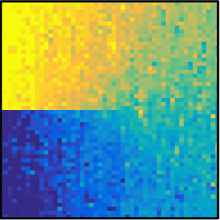
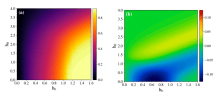
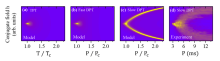
    In a recent article published in Physical Review Letters (Phys. Rev. Lett. 131, 116701 (2023)) and selected as an Editor’s suggestion, Mikel Quintana and Andreas Berger from the Nanomagnetism group at nanoGUNE succeeded in experimentally detecting and quantifying critical scaling near the dynamic phase transition (...

  • Edoardo Vicentini, ganador del premio Bernard J. Couillaud 2023

    "Me siento verdaderamente agradecido y honrado de recibir el premio Bernard J. Couillaud en Láseres Ultrarrápidos." 

  • CIC nanoGUNE organiza la primera escuela de verano de Nanoscopía Óptica de Campo Cercano

    "Cuando desarrollamos las herramientas de nanoimagen óptica s-SNOM y nano-FTIR, nunca pensé que pudieran tener un potencial de aplicación tan amplio", afirma el Profesor de Investigación Ikerbasque Rainer Hillenbrand cuando es preguntado por la evolución de su campo de investigación. Esta semana, del 6 al 9 de...

  • Una tecnología desarrollada en CIC nanoGUNE impulsa la innovación en el sector textil

    El centro vasco de investigación en nanociencia CIC nanoGUNE está desarrollando técnicas específicas para funcionalizar fibras y tejidos de la industria textil. Esta prometedora línea de investigación, liderada por el grupo de Nanomateriales, se enmarca dentro de un proyecto Elkartek en el que participan también el...

  • Researchers observe extremely squeezed directional THz waves in thin semiconductor crystals

    An international team of scientists from the Basque research center CIC nanoGUNE, Shanghai University for Science and Technology, Fudan University (Shanghai), Brno University of Technology, University of the Basque Country, Materials Physics Center (CSIC-UPV/EHU), Donostia International Physics Center and the Max...

  • NanoReMedi, un proyecto de investigación innovador sobre medicina regenerativa

    CIC nanoGUNE participa en el proyecto NanoReMedi financiado por la Unión Europea, que ofrece la oportunidad de llevar a cabo una tesis doctoral innovadora en nanoandamios funcionales para la medicina regenerativa, dentro de un modelo educativo de doctorado conjunto.

  • Fèlix Casanova recibe, por segunda vez, el Premio Intel al Investigador Destacado

    El investigador Ikerbasque Fèlix Casanova, colíder del grupo de Nanodispositivos de nanoGUNE, ha sido galardonado con el Premio Intel al Investigador Destacado 2022, por sus contribuciones en la tecnología MESO, una tecnología que ha tenido en cuenta desde su concepción los requerimientos de memoria,...

  • El físico Nacho Pascual obtiene una ERC Advanced Grant para desarrollar nuevos materiales cuánticos

    El Consejo Europeo de Investigación (ERC, por sus siglas en inglés) ha concedido una de sus prestigiosos proyectos ERC Advanced Grants al Profesor de Investigación Ikerbasque en CIC nanoGUNE Nacho Pascual. La ayuda de tres millones de euros servirá para llevar a cabo el proyecto CONSPIRA (Coherent control of spin...

  • CIC nanoGUNE joins the Basque Microelectronics Hub – BMH

    NanoGUNE has joined the Basque Microelectronics Hub (BMH) as a key player in the basque electronics industry to transfer our knowledge to the closest industrial fabric, in order to support the advances the sector requires in the Basque Country.

  • CIC nanoGUNE joins the Basque Microelectronics Hub – BMH

    NanoGUNE has joined the Basque Microelectronics Hub (BMH) as a key player in the basque electronics industry to transfer our knowledge to the closest industrial fabric, in order to support the advances the sector requires in the Basque Country.

  • Francesco Calavalle, winner of the GEFES award for best experimental thesis

    The researcher Francesco Calavalle has been awarded the prize for best experimental PhD thesis by the Condensed Matter Physics Division (GEFES) of the Spanish Royal Physics Society (RSEF). The thesis “Probing and tuning the properties of van der Waals materials“ was worked on at CIC nanoGUNE, under the supervision...

  • Abierto el plazo de inscripción del programa de prácticas de verano
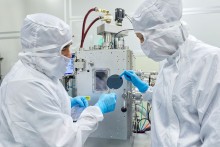
    Las prácticas para estudiantes de grado consistirán en participar durante dos meses en proyectos de investigación reales de nanoGUNE. El plazo de presentación de solicitudes está abierto hasta el 12 de febrero de 2023.

  • Abierto el plazo de inscripción del programa de prácticas de verano

    Las prácticas para estudiantes de grado consistirán en participar durante dos meses en proyectos de investigación reales de nanoGUNE. El plazo de presentación de solicitudes está abierto hasta el 12 de febrero de 2023.

  • Abierto el plazo de inscripción del programa de prácticas de verano

    Las prácticas para estudiantes de grado consistirán en participar durante dos meses en proyectos de investigación reales de nanoGUNE. El plazo de presentación de solicitudes está abierto hasta el 12 de febrero de 2023.

  • Abierto el plazo de inscripción del programa de prácticas de verano

    Las prácticas para estudiantes de grado consistirán en participar durante dos meses en proyectos de investigación reales de nanoGUNE. El plazo de presentación de solicitudes está abierto hasta el 12 de febrero de 2023.

  • Abierto el plazo de inscripción del programa de prácticas de verano

    Las prácticas para estudiantes de grado consistirán en participar durante dos meses en proyectos de investigación reales de nanoGUNE. El plazo de presentación de solicitudes está abierto hasta el 12 de febrero de 2023.

  • Abierto el plazo de inscripción del programa de prácticas de verano

    Las prácticas para estudiantes de grado consistirán en participar durante dos meses en proyectos de investigación reales de nanoGUNE. El plazo de presentación de solicitudes está abierto hasta el 12 de febrero de 2023.

  • Abierto el plazo de inscripción del programa de prácticas de verano

    Las prácticas para estudiantes de grado consistirán en participar durante dos meses en proyectos de investigación reales de nanoGUNE. El plazo de presentación de solicitudes está abierto hasta el 12 de febrero de 2023.

  • Abierto el plazo de inscripción del programa de prácticas de verano

    Las prácticas para estudiantes de grado consistirán en participar durante dos meses en proyectos de investigación reales de nanoGUNE. El plazo de presentación de solicitudes está abierto hasta el 12 de febrero de 2023.

  • Abierto el plazo de inscripción del programa de prácticas de verano

    Las prácticas para estudiantes de grado consistirán en participar durante dos meses en proyectos de investigación reales de nanoGUNE. El plazo de presentación de solicitudes está abierto hasta el 12 de febrero de 2023.

  • Resucitan ancestros de la herramienta de edición genética CRISPR de hace 2600 millones de años

    Un grupo de investigación internacional ha reconstruido por primera vez ancestros del conocido sistema CRISPR-Cas de hace 2.600 millones de años y ha estudiado su evolución a lo largo del tiempo. Los resultados apuntan a que los sistemas revitalizados no solo funcionan, sino que son más versátiles que las versiones...

  • Publication of the 2022 magneto-optics roadmap
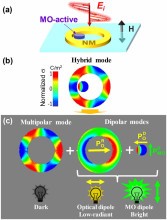
    Under the editorial leadership of nanoGUNE’s Nanomagnetism group leaders Paolo Vavassori and Andreas Berger, the Journal of Physics D – Applied Physics has now published its 2022 magneto-optics Roadmap. An upcoming Webinar focused on the Roadmap will also explore the latest developments in magneto-optics science...

  • Oksana Yurkevich, best oral presentation award at NANO2022

    Oksana Yurkevich got the best oral presentation award on the Nano2022 - Functional Materials by Thin Film Coatings symposium for her talk on "Polymer-organic hybrids for inducing self-healing functionality in metal oxides".

  • CIC nanoGUNE amplía su cartera de patentes
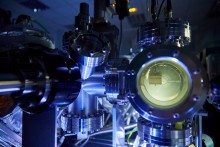
    La concesión de tres patentes, y otras tres nuevas solicitudes de patente, enriquecen notablemente la cartera de propiedad industrial de CIC nanoGUNE. El centro cuenta en la actualidad con 25 solicitudes de patente en los campos de la salud, la óptica, la ciencia de materiales y la electrónica, todo ello, eso sí, a...

  • CIC nanoGUNE amplía su cartera de patentes

    La concesión de tres patentes, y otras tres nuevas solicitudes de patente, enriquecen notablemente la cartera de propiedad industrial de CIC nanoGUNE. El centro cuenta en la actualidad con 25 solicitudes de patente en los campos de la salud, la óptica, la ciencia de materiales y la electrónica, todo ello, eso sí, a...

  • CIC nanoGUNE amplía su cartera de patentes

    La concesión de tres patentes, y otras tres nuevas solicitudes de patente, enriquecen notablemente la cartera de propiedad industrial de CIC nanoGUNE. El centro cuenta en la actualidad con 25 solicitudes de patente en los campos de la salud, la óptica, la ciencia de materiales y la electrónica, todo ello, eso sí, a...

  • CIC nanoGUNE amplía su cartera de patentes

    La concesión de tres patentes, y otras tres nuevas solicitudes de patente, enriquecen notablemente la cartera de propiedad industrial de CIC nanoGUNE. El centro cuenta en la actualidad con 25 solicitudes de patente en los campos de la salud, la óptica, la ciencia de materiales y la electrónica, todo ello, eso sí, a...

  • CardioPrint, nuevos procesos de biofabricación para implantes cardíacos

    CIC nanoGUNE se ha convertido recientemente en una de las organizaciones que impulsan el proyecto CardioPrint, para avanzar en el campo de la biofabricación mediante el desarrollo de un novedoso dispositivo capaz de generar tejidos humanos bioartificiales con una precisión sin precedentes. Nuestros objetivos son,...

  • NEW (CRYO-)FIB MONSTER AT nanoGUNE

    On April 25, the Electron Microscopy group organized a seminar to present to the Basque community the opportunities that will be derived from the new (Cryo-)FIB equipment that will be installed in nanoGUNE.

  • Oksana Yurkevich, first place winner in SPIE Smart Structures + Nondestructive Evaluation 2022

    Oksana Yurkevich got the first place for her outstanding presentation on Self-healing coatings obtained by vapor phase infiltration at SPIE Smart Structures + Nondestructive Evaluation 2022 Bioinspiration, Biomimetics, and Bioreplication XII on 4-10 April 2022. 

  • Magnet-free chiral nanowires for spintronic devices

    Researchers from the Basque Nanoscience Research Center CIC nanoGUNE (San Sebastian, Spain), in collaboration with POLYMAT (San Sebastian, Spain), the Institute of Physics of the Martin Luther University Halle-Wittenberg and the Max Planck Institute of Microstructure Physics (both in Halle, Germany) demonstrate the...

  • Magnet-free chiral nanowires for spintronic devices

    Researchers from the Basque Nanoscience Research Center CIC nanoGUNE (San Sebastian, Spain), in collaboration with POLYMAT (San Sebastian, Spain), the Institute of Physics of the Martin Luther University Halle-Wittenberg and the Max Planck Institute of Microstructure Physics (both in Halle, Germany) demonstrate the...

  • Los "jeroglíficos del microprocesador" de Evgenii Modin, foto seleccionada en FOTCIENCIA

    La imagen "Jeroglíficos de Microprocesador" de Evgenii Modin, especialista en Microscopía Electrónica del CIC nanoGUNE, ha sido seleccionada como una de las mejores imágenes científicas de 2021 en FOTCIENCIA. ¡Enhorabuena!

  • CIC nanoGUNE ampliará sus instalaciones de microscopía electrónica con un instrumento FIB único

    El Ministerio de Ciencia e Innovación del Gobierno de España ha concedido 1,5 millones de euros a nanoGUNE con el objetivo de traer principalmente nuevas tecnologías FIB o tecnologías de Haz de Iones Focalizados al País Vasco (FIB, Focused Ion Beams). El equipo estará compuesto de un microscopio electrónico de haz...

  • CIC nanoGUNE obtiene un proyecto para investigar la esclerosis lateral amiotrófica (ELA)

    La Fundación Española para el Fomento de la Investigación de la Esclerosis Lateral Amiotrófica (FUNDELA) concede un proyecto para investigación sobre esclerosis lateral amiotrófica (ELA) a CIC nanoGUNE, en colaboración con el Laboratorio de Investigación en ELA del Hospital 12 de Octubre - “i+12” y el Servicio de...

  • Emilio Artacho APS Fellowship in 2021

    Emilio Artacho, leader of the Theory Group of nanoGUNE, has recently been named APS Fellow by the American Physical Society (APS) for developing the linear scaling SIESTA method and for pioneering work on developing and applying methods to study energy dissipation of swift ions in solids.

  • Overriding Universality via nano-scale Materials Design
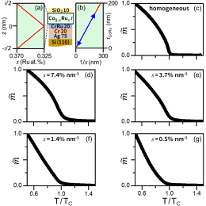
    In a recent article published in Physical Review Letters (Phys. Rev. Lett. 127, 147201 (2021)), researchers from the Nanomagnetism group at nanoGUNE in collaboration with scientists from the US and Colombia have demonstrated that it is possible to design thermodynamic critical exponents a la carte and override the...

  • Researchers develop an innovative strategy to focus infrared light into the nanoscale

    An international team of researchers, including members of nanoGUNE's Nanooptics group, publish in “Science Advances” the grounds for the realization of nanodevices that, based on the manipulation of light at the nanoscale, promise the development of extraordinarily sensitive biosensors. The researchers also...

  • Graphene nanoribbons for emerging quantum technologies

    A multidisciplinary group of research teams, working in the framework of FET OPEN Project SPRING (www.springfetopen.eu), report that certain stripes of graphene called graphene nanoribbons (GNRs) acquire the anomalous topological state of matter when narrowed down to just a few nanometers in width. The...

  • Review: Interface nano-optics with van der Waals polaritons

    An international team, including the leader of the Nanooptics group at nanoGUNE, Rainer Hillenbrand, discusses in ‘Nature’  the state-of-the-art and opportunities for controlling the propagation of nanolight (in form of polaritons) in van der Waals materials with the help of classical refractive optics...

  • Review: Nanoscale terahertz scanning probe microscopy

    Four international experts, including the leader of the Nanooptics group at nanoGUNE Rainer Hillenbrand, analyze in ‘Nature Photonics’ the terahertz scanning probe microscopy techniques that achieve spatial resolution on the scale of micrometres to ångströms, with particular emphasis on their overarching approaches...

  • Understanding nanolight refraction on highly anisotropic materials

    An international team of researchers, including members of nanoGUNE's Nanooptics group, unveils in ‘Nature Communications’ fundamental aspects of nanolight refraction in highly anisotropic media. The researchers also report the design of a new planar nanolens 1000 times smaller than the thickness of a human hair,...

  • Spin Control Without Magnetic Fields

    Researchers from the Nanodevices Group at CIC nanoGUNE demonstrate that they can control the polarization direction of a spin current without having to apply a magnetic field, which could aid in implementing energy-efficient spintronics devices. The work has been published in Physical Review Letters.

  • PhD Thesis: Self-assembly and optical properties of gold nanoparticle superlattices for surface-enhanced Raman spectroscopy

    Mathias Charconnet, early stage researcher of the Nanoengineering Group at nanoGUNE, has defended his PhD thesis Today at the University of the Basque Country. 

  • Andoni Rodriguez-Abetxuko, best PhD talk at NG Biocatalysis Symposium

    Andoni Rodriguez-Abetxuko got the best PhD talk award in the Next Generation of Biocatalysis Symposium that took place in Bern & virtually on 27-28 May 2021. 

  • Dr. Lorenzo Fallarino has been recently nominated as Emerging Leader in Applied Physics
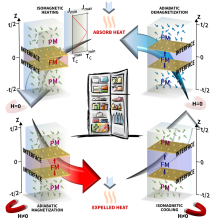
    Dr. Lorenzo Fallarino, researcher in CIC nanoGUNE´s Nanomagnetism group, has been recently invited by the Editorial Board of Journal of Physics D: Applied Physics to publish a Topical Review on "Graded Magnetic Materials" and separately, he was nominated to contribute to a special issue of the journal highlighting...

  • Fèlix Casanova recibe el Premio Intel al Investigador Destacado 2020

    El investigador Ikerbasque Fèlix Casanova, el líder del grupo de Nanodispositivos de nanoGUNE, ha sido recientemente galardonado con el Premio Intel al Investigador Destacado 2020, por sus contribuciones en la tecnología MESO, una tecnología que mira a las necesidades de los dispositivos electrónicos del futuro.

  • Una investigación de CIC nanoGUNE sobre la luz, portada en la revista Nature Photonics

    Investigadores del CIC nanoGUNE, en colaboración con el Donostia International Physics Center (DIPC) y la Universidad de Oviedo, emplearon una técnica de nanoimagen espectroscópica para estudiar cómo interactúan la nanoluz infrarroja -en forma de polaritones fonónicos- y las vibraciones moleculares. El trabajo...

  • Las nanopartículas como portadores de fármacos

    Los centros donostiarras CIC nanoGUNE y KUSUDAMA Therapeutics SL han colaborado en el estudio de la medición de la carga real de los fármacos en las nanopartículas individuales para el tratamiento de diversas afecciones pulmonares.

  • Vibrational Encounters – Phonon Polaritons Meet Molecules

    Researchers from CIC nanoGUNE BRTA (San Sebastian, Spain), in collaboration with the Donostia International Physics Center (San Sebastián, Spain) and the University of Oviedo (Spain) employed a spectroscopic nanoimaging technique to study how infrared nanolight - in form of phonon polaritons - and molecular...

  • CIC nanoGUNE recibe 1,5 millones de euros de la Comisión Europea

    Tres proyectos de investigación de CIC nanoGUNE han sido seleccionados en la convocatoria europea FET Open (Future and Emerging Technologies). Las iniciativas FET Open tienen por objetivo fortalecer grandes proyectos de investigación científica y técnica de alto riesgo realizados en colaboración. Son proyectos...

  • CIC nanoGUNE recibe 1,5 millones de euros de la Comisión Europea

    Tres proyectos de investigación de CIC nanoGUNE han sido seleccionados en la convocatoria europea FET Open (Future and Emerging Technologies). Las iniciativas FET Open tienen por objetivo fortalecer grandes proyectos de investigación científica y técnica de alto riesgo realizados en colaboración. Son proyectos...

  • Simulaciones computacionales para estudiar los efectos de la radiación espacial

    El grupo de Teoría de nanoGUNE liderado por Emilio Artacho está centrado en el proyecto europeo ESC2RAD para entender mejor el daño de las radiaciones solares y cósmicas en los astronautas, las naves espaciales y los paneles solares de los satélites.

  • Maider Rekondo Salsamendi recibe la Beca de Emprendimiento Juvenil

    La investigadora del grupo Autoensamblado de CIC nanoGUNE Maider Rekondo Salsamendi recibe la Beca de Emprendimiento Juvenil por el proyecto denominado Zelulosa zuntzak elektrospinning bidez.

  • CIC nanoGUNE y Astilleros Balenciaga colaboran en el análisis del acero naval

    CIC nanoGUNE y Astilleros Balenciaga han colaborado conjuntamente para comprobar que el proceso de conformado térmico del acero naval utilizado para la construcción de buques de mediano tamaño no afecta negativamente a la microestructura del material.

  • The Electronic Structure Library (ESL): a modular software development paradigm

    NanoGUNE's Theory group, led by Ikerbasque Professor Emilio Artacho, is contributing to the development of a new open-source modular software development paradigm called Electronic Structure Library (ESL), promoted by CECAM (the European Centre for Atomic and Molecular Calculations).

  • CIC nanoGUNE lanza una nueva tecnología disruptiva que permite un parto más seguro de los bebés

    El Grupo de Nanoingeniería de nanoGUNE ha desarrollado una nueva tecnología que permite el monitoreo no invasivo y continuo de los riesgos fisiológicos de los bebés durante el parto en tiempo real. La tecnología ayuda a los obstetras a tomar decisiones rápidas y, por lo tanto, a reducir el creciente número de...

  • Publication of the 2020 Magnetism Roadmap
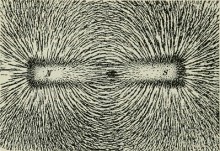
    Under the Guest Editorship of nanoGUNE’s Research Director Dr. Andreas Berger, the Journal of Physics D – Applied Physics just published the 2020 Magnetism Roadmap.

  • nanoGUNE reaches new depths in infrared nanospectroscopy

    Researchers from the Nanooptics Group at CIC nanoGUNE demonstrate that nanoscale infrared imaging – which is established as a surface-sensitive technique – can be employed for chemical nanoidentification of materials that are located up to 100 nm below the surface. The results further show that the infrared...

  • CIC nanoGUNE y CIKAUTXO trabajan conjuntamente en la optimización del caucho

    CIC nanoGUNE, el Centro de Investigación Cooperativa en Nanociencias, y CIKATEK, la unidad de I+D+i de CIKAUTXO, trabajan conjuntamente para la obtención de caucho de alto valor añadido mediante la aplicación de la nanotecnología.

  • CIC nanoGUNE y CIKAUTXO trabajan conjuntamente en la optimización del caucho

    CIC nanoGUNE, el Centro de Investigación Cooperativa en Nanociencias, y CIKATEK, la unidad de I+D+i de CIKAUTXO, trabajan conjuntamente para la obtención de caucho de alto valor añadido mediante la aplicación de la nanotecnología.

  • Un proyecto coordinado por CIC nanoGUNE recibe cerca de 4 millones de euros de la Comisión Europea

    CIC nanoGUNE coordina el proyecto SPEAR que persigue estudiar nuevos materiales para la próxima generación de memorias y procesadores para computación, junto a cinco instituciones académicas (CEA-Francia, ETH Zuric-Suiza, IMEC-Belgica, U. Hamburg - Alemania, Martin Luther University Halle –Alemania) y tres empresas...

  • Descifrando el magnetismo del grafeno

    Investigadores del Donostia International Physics Center (DIPC), del CIC nanoGUNE y del CiQUS de la Universidade de Santiago de Compostela (USC) avanzan en el descifrado del magnetismo de una pequeña pieza triangular de grafeno, ampliando así el conocimiento de este versátil material y sus potenciales aplicaciones...

  • Cómo manipular la luz en la nanoescala en amplios rangos de frecuencia

    Un equipo internacional liderado por investigadores de la Universidad de Oviedo y del Centro de Investigación en Nanomateriales y Nanotecnología (CINN-CSIC), junto con científicos de los centros de investigación vascos CIC nanoGUNE, Donostia Internatioanl Physics Center (DIPC), Centro de Física de Materiales (CFM,...

  • CIC nanoGUNE works on infrared sensing and photodetectors within GrapheneCore3

    The Nanooptics Group of CIC nanoGUNE is involved in the Work Package 8: Photonics and Optoelectronics in the Graphene Flagship Core 3 project, the fourth funding cycle of the €1 Billion research initiative funded by the European Commission. The mission of Work Package Photonics and Optoelectronics is to develop GRM...

  • Technology offering the optimisation of polymer´s properties is now protected as part of nanoGUNE´s IP portfolio

    The nanomaterials group in nanoGUNE, led by Mato Knez, has developed a new technology called SCIP that allows an improvement of the mechanical properties of polymers. The technology can be directly applied to functionalize textile, opening new perspectives in product development in the sports/fashion or personal...

  • Low-power spin detection in non-magnetic systems

    A team of researchers from Université Grenoble Alpes - CNRS - Spintec, Unité Mixte de Physique CNRS-Thales, and Université d'Evry, and also including Dr. Diogo. C Vaz, currently at CIC nanoGUNE, reports on an alternative strategy to achieve low-power spin detection in a non-magnetic system. The results have now...

  • La investigación y la tecnología vascas, comprometidas con la alerta sanitaria de la COVID-19

    Los centros tecnológicos y de investigación colaborativa integrados en la alianza BRTA participan en distintas iniciativas científicas y tecnológicas con el objetivo de reducir el impacto de la emergencia generada por el virus SARS-CoV-2.

  • CIC nanoGUNE e INTEL acercan la tecnología MESO un paso más cerca de la realidad

    El centro vasco de investigación en nanociencia CIC nanoGUNE y la multinacional Intel, el mayor fabricante de circuitos integrados del mundo, trabajan duro en el último año y medio en una tecnología con la que miran a los dispositivos electrónicos del futuro: la tecnología MESO. Esta tecnología integra la lógica y...

  • PhD thesis by Juan Manuel Gomez: Spin-transport in magnetic insulator/heavy metal heterostructures

    Juan Manuel Gomez, Pre-doctoral Researcher at the Nanodevices group at nanoGUNE, received his PhD at the University of the Basque Country (UPV/EHU) after the defense of his thesis project at the beginning of 2020. His research work, entitled “Spin-transport in magnetic insulator/heavy metal heterostructures" ...

  • PhD Thesis by Javier Zaldivar: Magnetic-Impurity-Induced Bound States in B-Bi2Pd

    Javier Zaldivar, Pre-doctoral researcher at the Nanoimaging Group at nanoGUNE, received his PhD at the University of the Basque Country (UPV/EHU) after the defense of his thesis project on the 17 January 2020. His research work, entitled “Magnetic-Impurity-Induced Bound States in B-Bi2Pd" has been...

  • nanoGUNE PhD Workshop 2020

    The PhD researchers of nanoGUNE have organized a one-day event to celebrate the 11th anniversary of nanoGUNE. The workshop has consisted of three sessions: Spin-off inside and outside of nanoGUNE, Escape the lab, and a poster session.

  • nanoGUNE PhD Workshop 2020

    The PhD researchers of nanoGUNE have organized a one-day event to celebrate the 11th anniversary of nanoGUNE. The workshop has consisted of three sessions: Spin-off inside and outside of nanoGUNE, Escape the lab, and a poster session.

  • nanoGUNE PhD Workshop 2020

    The PhD researchers of nanoGUNE have organized a one-day event to celebrate the 11th anniversary of nanoGUNE. The workshop has consisted of three sessions: Spin-off inside and outside of nanoGUNE, Escape the lab, and a poster session.

  • nanoGUNE PhD Workshop 2020

    The PhD researchers of nanoGUNE have organized a one-day event to celebrate the 11th anniversary of nanoGUNE. The workshop has consisted of three sessions: Spin-off inside and outside of nanoGUNE, Escape the lab, and a poster session.

  • nanoGUNE PhD Workshop 2020

    The PhD researchers of nanoGUNE have organized a one-day event to celebrate the 11th anniversary of nanoGUNE. The workshop has consisted of three sessions: Spin-off inside and outside of nanoGUNE, Escape the lab, and a poster session.

  • nanoGUNE PhD Workshop 2020

    The PhD researchers of nanoGUNE have organized a one-day event to celebrate the 11th anniversary of nanoGUNE. The workshop has consisted of three sessions: Spin-off inside and outside of nanoGUNE, Escape the lab, and a poster session.

  • nanoGUNE PhD Workshop 2020

    The PhD researchers of nanoGUNE have organized a one-day event to celebrate the 11th anniversary of nanoGUNE. The workshop has consisted of three sessions: Spin-off inside and outside of nanoGUNE, Escape the lab, and a poster session.

  • nanoGUNE PhD Workshop 2020

    The PhD researchers of nanoGUNE have organized a one-day event to celebrate the 11th anniversary of nanoGUNE. The workshop has consisted of three sessions: Spin-off inside and outside of nanoGUNE, Escape the lab, and a poster session.

  • nanoGUNE PhD Workshop 2020

    The PhD researchers of nanoGUNE have organized a one-day event to celebrate the 11th anniversary of nanoGUNE. The workshop has consisted of three sessions: Spin-off inside and outside of nanoGUNE, Escape the lab, and a poster session.

  • nanoGUNE lanza una nueva convocatoria de prácticas de verano para universitarios
    CIC nanoGUNE acaba de lanzar la convocatoria del Programa de Prácticas de Verano que organiza anualmente; ofrece a los estudiantes universitarios la oportunidad de conocer de primera mano la actividad de un centro de investigación de referencia a nivel mundial.

  • nanoGUNE lanza una nueva convocatoria de prácticas de verano para universitarios

    CIC nanoGUNE acaba de lanzar la convocatoria del Programa de Prácticas de Verano que organiza anualmente; ofrece a los estudiantes universitarios la oportunidad de conocer de primera mano la actividad de un centro de investigación de referencia a nivel mundial.

  • nanoGUNE lanza una nueva convocatoria de prácticas de verano para universitarios

    CIC nanoGUNE acaba de lanzar la convocatoria del Programa de Prácticas de Verano que organiza anualmente; ofrece a los estudiantes universitarios la oportunidad de conocer de primera mano la actividad de un centro de investigación de referencia a nivel mundial.

  • nanoGUNE lanza una nueva convocatoria de prácticas de verano para universitarios

    CIC nanoGUNE acaba de lanzar la convocatoria del Programa de Prácticas de Verano que organiza anualmente; ofrece a los estudiantes universitarios la oportunidad de conocer de primera mano la actividad de un centro de investigación de referencia a nivel mundial.

  • nanoGUNE lanza una nueva convocatoria de prácticas de verano para universitarios

    CIC nanoGUNE acaba de lanzar la convocatoria del Programa de Prácticas de Verano que organiza anualmente; ofrece a los estudiantes universitarios la oportunidad de conocer de primera mano la actividad de un centro de investigación de referencia a nivel mundial.

  • nanoGUNE lanza una nueva convocatoria de prácticas de verano para universitarios

    CIC nanoGUNE acaba de lanzar la convocatoria del Programa de Prácticas de Verano que organiza anualmente; ofrece a los estudiantes universitarios la oportunidad de conocer de primera mano la actividad de un centro de investigación de referencia a nivel mundial.

  • nanoGUNE lanza una nueva convocatoria de prácticas de verano para universitarios

    CIC nanoGUNE acaba de lanzar la convocatoria del Programa de Prácticas de Verano que organiza anualmente; ofrece a los estudiantes universitarios la oportunidad de conocer de primera mano la actividad de un centro de investigación de referencia a nivel mundial.

  • nanoGUNE lanza una nueva convocatoria de prácticas de verano para universitarios

    CIC nanoGUNE acaba de lanzar la convocatoria del Programa de Prácticas de Verano que organiza anualmente; ofrece a los estudiantes universitarios la oportunidad de conocer de primera mano la actividad de un centro de investigación de referencia a nivel mundial.

  • nanoGUNE lanza una nueva convocatoria de prácticas de verano para universitarios

    CIC nanoGUNE acaba de lanzar la convocatoria del Programa de Prácticas de Verano que organiza anualmente; ofrece a los estudiantes universitarios la oportunidad de conocer de primera mano la actividad de un centro de investigación de referencia a nivel mundial.

  • nanoGUNE lanza una nueva convocatoria de prácticas de verano para universitarios

    CIC nanoGUNE acaba de lanzar la convocatoria del Programa de Prácticas de Verano que organiza anualmente; ofrece a los estudiantes universitarios la oportunidad de conocer de primera mano la actividad de un centro de investigación de referencia a nivel mundial.

  • Edurne Sagasta, Premio GEFES 2019 mejor tesis experimental

    La investigadora Edurne Sagasta ha sido galardonada por la División de Física de la Materia Condensada (GEFES) de la Real Sociedad Española de Física (RSEF) con el premio a la mejor tesis doctoral experimental. La tesis titulada Spin-to-charge current conversion in systems with spin-orbit coupling fue realizada en...

  • CIC nanoGUNE mostrará en Basque Industry 4.0 sus últimas tecnologías en impresión 3D y sistemas de detección

    Organizado por el departamento de Desarrollo Económico e Infraestructuras del Gobierno Vasco, a través del Grupo SPRI, el BEC de Barakaldo acogerá mañana y pasado, 20 y 21 de noviembre, la 6ª edición del Basque Industry 4.0. Representantes de empresas vascas, entre ellas el centro de investigación CIC nanoGUNE, se...

  • New uses for an innovative coating technique

    The results in brief of the EU-funded ALDing project, published at CORDIS, highlight the importance of the project to boost nanoGUNE's start-up CTECHnano.

  • Nanoimanes de grafeno para tecnologías de la información más rápidas y sostenibles

    CIC nanoGUNE ha celebrado la reunión de lanzamiento del proyecto de investigación SPRING (SPin Research IN Graphene), financiado por la Unión Europea, los días 7 y 8 de noviembre de 2019 en Donostia / San Sebastián.

  • PhD student position at Mondragon University in collaboration with CIC nanoGUNE

    The University of Mondragon has a 3 years position for a PhD student for a project in collaboration with the Electron Microscopy Laboratory at CIC nanoGUNE.

  • El reto social de reducir y prevenir la presencia de plásticos en los mares a debate

    De entre toda la basura marina presente en nuestros océanos, la correspondiente a los plásticos es cada vez más abundante, y entraña consecuencias para los ecosistemas marinos y para nosotros mismos, que merecen ser entendidas, prevenidas y, en la medida de lo posible, neutralizadas. Por ello, los días 1 y 2 de...

  • PhD Student Mathias Charconnet, Best Paper Award

    Charconnet won the award on the International Conference on Optical MEMS and Nanophotonics. Congratulations!

  • Fast and selective optical heating for functional nanomagnetic metamaterials
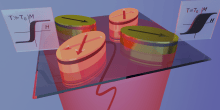
    In a recent article published in Nanoscale, researchers from the Nanomagnetism group at nanoGUNE demonstrate the use of hybrid magnetic-plasmonic elements to facilitate contactless and selective temperature control in magnetic functional metamaterials. Compared to so-far used global heating schemes, which are slow...

  • El primer altavoz con tecnología basada en grafeno ya está en el mercado

    Investigadores del grupo de Nanobiomecánica de CIC nanoGUNE e ingenieros de SEAS Fabrikker, líder del sector en altavoces de audio de alta gama, han llevado a cabo una investigación conjunta en la cual gracias al grafeno han conseguido mejorar los conos de los altavoces. Recientemente la empresa noruega ha lanzado...

  • Researchers discover directional and long-lived nanolight in a 2D material

    An international team led by researchers from Monash University (Melbourne, Australia), University of Oviedo (Asturias, Spain), CIC nanoGUNE (San Sebastián, Spain), and Soochow University (Suzhou, China) discover squeezed light ('nanolight') in the nanoscale that propagates only in specific directions along thin...

  • CIC nanoGUNE colabora con Intel para abrir camino a los futuros ordenadores

    El centro vasco de investigación en nanociencia CIC nanoGUNE y la multinacional Intel, el mayor fabricante de circuitos integrados del mundo, trabajan conjuntamente en un proyecto puntero que persigue desarrollar lo que Intel ha denominado el dispositivo “MESO”, una nueva tecnología que ha tenido en cuenta desde su...

  • Openning horizonts of manufacturing

    CIC06 has made an excellent work opening new horizons in the machining technique, a manufacturing method with high added-value. The work, in collaboration with Mondragon Unibertsitatea, provides a deep understating of the mechanisms involve and disclose new paths for technique optimization. Please see the article...

  • “Me permite tener un pie en la ciencia, sabiendo que lo que hacemos es aplicable”

    Entrevista a Bentejuí Medina, investigador pre-doctoral de CIC nanoGUNE y la Universidad de Mondragón en la revista MU Universitas.

  • Apply for a Basque PhD grant with nanoGUNE

    NanoGUNE, located at the Ibaeta Campus of the UPV/EHU in Donostia – San Sebastián, offers PhD opportunities to graduates in Physics, Chemistry, Engineering, Biology, and related areas to get their PhD degree.

  • Apply for a Basque PhD grant with nanoGUNE

    NanoGUNE, located at the Ibaeta Campus of the UPV/EHU in Donostia – San Sebastián, offers PhD opportunities to graduates in Physics, Chemistry, Engineering, Biology, and related areas to get their PhD degree.

  • Apply for a Basque PhD grant with nanoGUNE

    NanoGUNE, located at the Ibaeta Campus of the UPV/EHU in Donostia – San Sebastián, offers PhD opportunities to graduates in Physics, Chemistry, Engineering, Biology, and related areas to get their PhD degree.

  • Apply for a Basque PhD grant with nanoGUNE

    NanoGUNE, located at the Ibaeta Campus of the UPV/EHU in Donostia – San Sebastián, offers PhD opportunities to graduates in Physics, Chemistry, Engineering, Biology, and related areas to get their PhD degree.

  • Apply for a Basque PhD grant with nanoGUNE

    NanoGUNE, located at the Ibaeta Campus of the UPV/EHU in Donostia – San Sebastián, offers PhD opportunities to graduates in Physics, Chemistry, Engineering, Biology, and related areas to get their PhD degree.

  • Apply for a Basque PhD grant with nanoGUNE

    NanoGUNE, located at the Ibaeta Campus of the UPV/EHU in Donostia – San Sebastián, offers PhD opportunities to graduates in Physics, Chemistry, Engineering, Biology, and related areas to get their PhD degree.

  • Apply for a Basque PhD grant with nanoGUNE

    NanoGUNE, located at the Ibaeta Campus of the UPV/EHU in Donostia – San Sebastián, offers PhD opportunities to graduates in Physics, Chemistry, Engineering, Biology, and related areas to get their PhD degree.

  • Apply for a Basque PhD grant with nanoGUNE

    NanoGUNE, located at the Ibaeta Campus of the UPV/EHU in Donostia – San Sebastián, offers PhD opportunities to graduates in Physics, Chemistry, Engineering, Biology, and related areas to get their PhD degree.

  • Apply for a Basque PhD grant with nanoGUNE

    NanoGUNE, located at the Ibaeta Campus of the UPV/EHU in Donostia – San Sebastián, offers PhD opportunities to graduates in Physics, Chemistry, Engineering, Biology, and related areas to get their PhD degree.

  • Phononic SEIRA - Enhancing light-molecule interactions via crystal lattice vibrations

    Researchers from CIC-nanoGUNE (San Sebastián, Spain), in collaboration with the Donostia International Physics Center (San Sebastián, Spain), Materials Physics Center (CFM, CSIC-UPV/EHU, San Sebastián, Spain) and University of Oviedo demonstrate a new way to strongly couple infrared light and molecular vibrations,...

  • Investigadores vascos ponen la luz “patas arriba”

    Investigadores de CIC nanoGUNE en colaboración con el Donostia International Physics Center (DIPC) y la Universidad Estatal de Kansas (EEUU) publican en la prestigiosa revista Science el desarrollo de una “metasuperficie hiperbólica” en la cual las ondas de luz se propagan...

  • Investigadores vascos ponen la luz “patas arriba”

    Investigadores de CIC nanoGUNE en colaboración con el Donostia International Physics Center (DIPC) y la Universidad Estatal de Kansas (EEUU) publican en la prestigiosa revista Science el desarrollo de una “metasuperficie hiperbólica” en la cual las ondas de luz se propagan...

  • Conectados al mundo molecular con cables de grafeno

    Científicos de CIC nanoGUNE, Donostia International Physics Center (DIPC), Centro de Física de Materiales (CFM) y CiQUS (Centro Singular de Investigación en Química Biológica y Materiales Moleculares), crean el dispositivo magnético ‘conectado’ más diminuto, compuesto por una única molécula.

  • Nanoparticles act as enzymes

    The result in brief of the EU project ARTEN, lead by Mato Knez (leader of the Nanomaterials group at nanoGUNE) are now available at CORDIS. 

  • Boron nitride nanoresonators for phonon-enhanced molecular vibrational spectroscopy at the strong coupling limit

    An accepted paper at Light-Science & Applications

  • Engineering electron pathways in 2D-topological insulators

    In a recent article published in Physical Review Letters researchers from CIC nanoGUNE, the Rudolf Peierls Centre for Theoretical Physics of Oxford, together with colleagues from Wuerzburg and Stanford University reported new insight into the electronic conduction and interference on 2D-topological insulators - an...

  • CIC nanoGUNE participa en dos proyectos europeos para formar a jóvenes investigadores

    NanoGUNE participará en dos nuevos proyectos sobre la electrónica cuántica y los recubrimientos híbridos en uno de los programas más competitivos de Europa, las Redes de Formación de la Unión Europea, Initial Training Networks (ITN, de sus siglas en inglés) a partir de enero de 2018. Gracias a esta participación,...

  • CIC nanoGUNE participa en dos proyectos europeos para formar a jóvenes investigadores

    NanoGUNE participará en dos nuevos proyectos sobre la electrónica cuántica y los recubrimientos híbridos en uno de los programas más competitivos de Europa, las Redes de Formación de la Unión Europea, Initial Training Networks (ITN, de sus siglas en inglés) a partir de enero de 2018. Gracias a esta participación,...

  • Los electrodos magnéticos aumentan la eficiencia de las células solares

    Investigadores de CIC nanoGUNE han desarrollado un dispositivo fotovoltaico un 14 % más eficiente gracias al magnetismo de sus contactos. El dispositivo es también capaz de proporcionar directamente corriente alterna.

  • 2017 Magnetism Roadmap

    With the co-authorship of nanoGUNE’s Nanomagnetism group leaders Dr. Andreas Berger and Dr. Paolo Vavassori, the Journal of Physics D – Applied Physics just published the 2017 Magnetism Roadmap. As a whole, the 2017 Magnetism Roadmap, which is an Open Access article, is intended to act as a reference point and...

  • NewsTest

    NewsTestintrotext

  • Deducen el tamaño de animales de hace 100-350 millones de años resucitando sus proteínas

    La prestigiosa revista Nature Structural & Molecular Biology ha publicado una investigación llevada a cabo por investigadores de CIC nanoGUNE. Han reconstruido experimentalmente fragmentos de titina del ancestro común de los mamíferos y todos los tetrápodos, entre otros, y han podido medir sus propiedades...

  • Los materiales del futuro se hacen 'topológicos'

    Una delgadísima capa de wolframio y telurio ha resultado ser un exótico tipo de material bautizado por los físicos como 'aislante topológico'. La revista Nature Physics ha publicado los resultados de este estudio en el que ha participado nanoGUNE. Las propiedades físicas de este material de dos dimensiones hacen...

  • Ultra-compact phase modulators based on graphene plasmons

    A collaborative group of researchers achieve light phase modulation with a footprint 30 times smaller than the light wavelength.

  • Primera aleación superelástica de dimensiones nanométricas

    Un equipo colaborativo de investigadores a explorado las propiedades superelásticas en la escala nanométrica a base de tallar pilares de una aleación hasta dimensiones nanométricas.

  • Quantum nanoscope

    A collaborative work published in Science shows how electrons surf the waves of light on graphene.

  • Molecular spintronics in Nature Materials

    Materials for second-generation information and communication technology applications should be as small and as fast as possible. It is precisely these kind of materials that Ikerbasque Prof. Luis Hueso, head of the Nanodevices Group at nanoGUNE is seeking for, together with his colleagues Mirko Cinchetti  (TU...

  • The strangeness of slow dynamics

    In a recent article published in Physical Review Letters (PRL 118, 117202 (2017)), researchers from the Nanomagnetism group at nanoGUNE reported so-far unknown anomalies near dynamic phase transitions (DPTs). Such anomalies do not exist in corresponding thermodynamic phase transitions (TPTs), and thus, they...

  • ERC Proof of Concept para Luis Hueso

    El grupo de Nanodispositivos del CIC nanoGUNE recibe una dotación de 150.000 euros de la Comisión Europea a través del programa ERC Proof of Concept, cuyo objetivo es poner en práctica el potencial innovador de las ideas generadas en proyectos de investigación de vanguardia financiados por el Consejo Europeo de...

  • A new dimension in chemical nanoimaging

    Researchers from the Basque institutions CIC nanoGUNE, Ikerbasque and Cidetec, and the German Robert Koch-Institut report the development of hyperspectral infrared nanoimaging. It is based on Fourier transform infrared nanospectroscopy (nano-FTIR) and enables highly sensitive spectroscopic imaging of chemical...

  • Fabrication and characterization of magnetic thin films and multilayers, PhD Thesis by Lorenzo Fallarino
    Lorenzo Fallarino, Pre-doctoral Researcher at the Nanomagnetism Group at CIC nanoGUNE, received his PhD at the University of the Basque Country (UPV/EHU) after the defense of his thesis project on Thursday 26th of January 2017. His research work, entitled “Fabrication and characterization of magnetic thin films and...

  • Programa de Prácticas de Verano: Convocatoria abierta hasta el 5 de febrero

    ¿Quieres hacer prácticas en verano? ¡Tenemos una gran opción para ti!

  • Programa de Prácticas de Verano: Convocatoria abierta hasta el 5 de febrero

    ¿Quieres hacer prácticas en verano? ¡Tenemos una gran opción para ti!

  • Programa de Prácticas de Verano: Convocatoria abierta hasta el 5 de febrero

    ¿Quieres hacer prácticas en verano? ¡Tenemos una gran opción para ti!

  • Programa de Prácticas de Verano: Convocatoria abierta hasta el 5 de febrero

    ¿Quieres hacer prácticas en verano? ¡Tenemos una gran opción para ti!

  • Programa de Prácticas de Verano: Convocatoria abierta hasta el 5 de febrero

    ¿Quieres hacer prácticas en verano? ¡Tenemos una gran opción para ti!

  • Programa de Prácticas de Verano: Convocatoria abierta hasta el 5 de febrero

    ¿Quieres hacer prácticas en verano? ¡Tenemos una gran opción para ti!

  • Designer magneto-optics with plasmonic magnetic nanostructures, PhD Thesis by Nicolò Maccaferri
    Nicolò Maccaferri, Pre-doctoral Researcher at the Nanomagnetism Group at CIC nanoGUNE, received his PhD at the University of the Basque Country (UPV/EHU) after the defense of his thesis project on 9 December 2016. His research work, entitled “Designer magneto-optics with plasmonic magnetic nanostructures", has been...

  • Functionalization of nanomaterials by atomic layer deposition, PhD thesis by Fan Yang

    Fan Yang, Pre-doctoral Researcher at the Nanomaterials Group at CIC nanoGUNE, received her PhD at the University of the Basque Country (UPV/EHU) after the defense of her thesis project on 10th October 2016. His research work, entitled “Functionalization of nanomaterials by atomic layer deposition", has been...

  • Investigadores del DIPC, CFM y nanoGUNE, coautores de uno de los doce artículos más relevantes en la historia de Journal of Physics

    Daniel Sánchez Portal, del Centro de Física de Materiales (CSIC-UPV/EHU) y Emilio Artacho, Profesor de la Universidad de Cambridge e investigador Ikerbasque en el CIC nanoGUNE, ambos asociados al Donostia International Physics Center (DIPC), son coautores de uno de los doce artículos más importantes en los 50 años...

  • Detección eléctrica de plasmones de grafeno a frecuencias de terahercios

    Un grupo de investigadores ha desarrollado una nueva técnica para visualizar fotocorrientes en la nanoescala, y la ha aplicado para observar ondas electromagnéticas extremadamente comprimidas (plasmones) a frecuencias de terahercios en un fotodetector de grafeno. Tanto la longitud de onda extremadamente corta de...

  • Detección eléctrica de plasmones de grafeno a frecuencias de terahercios

    Un grupo de investigadores ha desarrollado una nueva técnica para visualizar fotocorrientes en la nanoescala, y la ha aplicado para observar ondas electromagnéticas extremadamente comprimidas (plasmones) a frecuencias de terahercios en un fotodetector de grafeno. Tanto la longitud de onda extremadamente corta de...

  • Graphene does double duty for plasmons

    A study by ICFO, CIC nanoGUNE, Columbia University and the National Institute for Materials Science in Japan published in Nature Materials demonstrates how graphene can be employed simultaneously as both a plasmonic medium and detector.

  • Nuevos avances en la producción de energía limpia basada en enzimas

    El oxígeno inhibe las hidrogenasas, un grupo de enzimas que son capaces de producir y disociar el hidrógeno. Esta degradación es fatal para las posibles aplicaciones biotecnológicas de estas enzimas en la producción de la energía limpia. Es, por tanto, esencial comprender los mecanismos de dicho proceso. Un equipo...

  • twitter.com/bittner_ass

    News from self-assembly are continued on twitter.com/bittner_ass

  • Coexistence of superconductivity and charge density waves observed

    Scientists at Max Planck Institute for Solid State Research, BESSY II Synchrotron and nanoGUNE have discovered that an artificial structure composed of alternating layers of ferromagnetic and superconducting materials induce Charge Density Waves deeply into the superconducting regions, indicating new ways to...

  • Reconfigurable magnetic nanopatterns

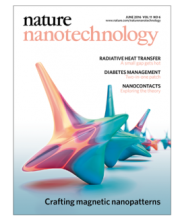
    A team of international scientists led by researchers of the CUNY Advanced Science Research Center (ASRC) and the Politecnico of Milan, and involving researchers from nanoGUNE, has demonstrated a novel approach for designing fully reconfigurable magnetic nanopatterns whose properties and functionality can be...

  • Remote control actuation goes down to nanoscale
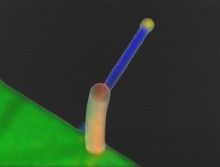
    Researchers of the Nanomagnetism Group and Electron Microscopy Group at CIC nanoGUNE devised and demonstrated a novel approach to nanoactuation that relies on magnetomechanics instead of the conventional electromechanics utilized in micro and nanoactuated mechanical systems. The work was reported in Small.

  • Remote control actuation goes down to nanoscale

    Researchers of the Nanomagnetism Group and Electron Microscopy Group at CIC nanoGUNE devised and demonstrated a novel approach to nanoactuation that relies on magnetomechanics instead of the conventional electromechanics utilized in micro and nanoactuated mechanical systems. The work was reported in Small.

  • Paper on multifrequency AFM

    We wrapped up our investigation of the surface structure of TMV: "Multifrequency Force Microscopy of Helical Protein Assembly on a Virus"

  • El proyecto CENTINELA ganador del programa Inspire

    Petronor ha presentado esta semana el primer balance del convenio con el departamento de Desarrollo Económico y Competitividad del Gobierno Vasco y los tres proyectos ganadores del programa de innovación abierta Inspire, entre los que se encuentra el proyecto CENTINELA elaborado por el Centro de Física de...

  • Fotografiadas 'in fraganti' las sustancias intermedias de una reacción química

    Investigadores del centro de Fisica de Materiales CSIC-UPV/EHU, el DIPC y nanoGUNE, en el marco de una colaboracion internacional, han fotografiado e identificado por primera vez la configuración de los enlaces de las especies intermedias de una compleja secuencia de transformaciones químicas de moléculas de...

  • New paper Okuda

  • Hot article in Nanoscale

    One of our papers has been selected as a Hot article 2016 in Nanoscale. 


  • Investigadores de nanoGUNE lideran una investigación sobre el grafeno portada en Nature Photonics

    Investigadores del CIC nanoGUNE, en colaboración con ICFO y Graphenea, han visualizado por primera vez la luz infrarroja en nanoestructuras de grafeno. Este trabajo abre el camino para nuevas posibilidades de fotodetectores, sensores y otros nanodispositivos optoelectrónicos y fotónicos eficientes y...

  • Spin injection in two-dimensional layered materials, PhD thesis by Oihana Txoperena

    Oihana Txoperena, Pre-doctoral Researcher at the Nanodevices Group at CIC nanoGUNE, received her PhD at the University of the Basque Country (UPV/EHU) after the defense of her thesis project on 8th April 2016. Her research work, entitled “Spin injection in two-dimensional layered materials", has been developed...

  • Welcome Franziska!

    New group member: Franziska Günl

  • Calò-Eiben-Okuda-Bittner paper: Nanoscale device architectures

  • Raul Perez-Jimenez recibirá el Premio Enrique Pérez Payá

    El Premio Enrique Pérez Payá de la Sociedad de Biofísica de España ha sido otorgado a Raul Perez-Jimenez, líder del Grupo de Nanobiomecánica de CIC nanoGUNE, “por sus estudios de las propiedades mecánicas de las macromoléculas biológicas”.

  • Nanolight at the edge

    Researchers from CIC nanoGUNE, in collaboration with ICFO and Graphenea, have demonstrated how infrared light can be captured by nanostructures made of graphene. This happens when light couples to charge oscillations in the graphene. The resulting mixture of light and charge oscillations – called plasmon - can be...

  • Itxasne Azpitarte recibirá el premio a la mejor estudiante del Master in New Materials

    Itxasne Azpitarte ha sido nombrada la mejor estudiante del curso 2014/2015 del Master in New Materials que se imparte entre varios departamentos universitarios de la UPV/EHU y la Universidad de Cantabria (UC).

  • New Okuda paper


    Pt and Pt based alloy nanoclusters in cowpea chlorotic mottle virus

  • New tool for non-invasive quality control of graphene devices

    Researchers from the Nanooptics group at CIC nanoGUNE in collaboration with colleagues at ICFO - The Institute of Photonic Sciences (Catalunya) developed a new non-invasive room-temperature technique for graphene device characterization. This work has been funded by the EC Graphene Flagship and was recently...

  • New paper in Trends in Biochemical Sciences


    ... by Okuda and coworkers in Roskilde and Sheffield

  • Bye


    Goodbye Annalisa!

  • A new magnetoresistance effect occurring in materials with strong spin-orbit coupling

    Researchers of the Nanodevices group, in collaboration with groups from the CFM and DIPC, both institutions also located in Donostia-San Sebastián, have discovered a new magnetoresistance effect occurring in materials with strong spin-orbit coupling. This new effect has been recently reported in the prestigious...

  • Happy Nova Year!


    NovaSpider 3D printing of red. graphene oxide

  • Nuevas herramientas de diagnóstico biomédico basadas en nanoingeniería

    El Grupo de Nanoingeniería de nanoGUNE, liderado por el investigador Ikerbasque Dr. Andreas Seifert, gira en torno a la investigación que combina tanto nanociencia fundamental como ingeniería aplicada, en el área de los microsistemas biomédicos, en particular. El objetivo del grupo es construir puentes entre las...

  • Lab news: New paper


    New paper with partners from CFM and DIPC

  • NbSe2, a true 2D superconductor

    An international team led by Miguel M. Ugeda (CIC nanoGUNE) and Michael F. Crommie (UC. Berkeley (USA)) has demonstrated the coexistence of superconductivity and charge density wave (CDW) order in a single layer of NbSe2, a model transition metal dichalcogenide (TMD) metal. The demonstration that a single layer of...

  • Magneto-optics on the edge

    In an article published and featured as an Editors’ suggestion in Physical Review Letters last week (PRL 115, 187403 (2015)), researchers from the Nanomagnetism group at nanoGUNE in collaboration with a team from the University of Cantabria and the University of Hamburg have reported on a massive increase of...

  • Lab news: Cooperation with Domotek


    Cooperation with Domotek

  • Interview with Dr. Berger published on JPhys+
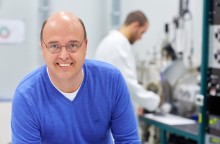
    An interview with Dr. Andreas Berger, nanoGUNE´s research director, has been published on JPhys+, the physics blog from IOP Publishing in the UK. The interview is part of a series of interviews that JPhys+ has conducted during this year with editors of the Journal of Physics Series, and revolves around the research...

  • Lab news: Talks and posters


    Annalisa, Maria, Alex present their latest results in early October

  • Nicolò Maccaferri, Premio Piero Brovetto 2015
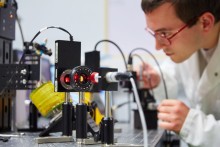
    El Premio Piero Brovetto 2015 ha sido otorgado al investigador pre-doctoral de nanoGUNE Nicolò Maccaferri por “sus contribuciones a los campos del nanomagnetismo y la nanoóptica, en particular por el estudio de las propiedades magnetoplasmónicas de las nanoestructuras magnéticas resonantes”.

  • Lab news: Conference presentations


    ECOSS and E-MRS


  • Frenando la luz en la nanoescala

    La velocidad de la luz cuando viaja en el vacío es siempre la misma, algo inferior a 300 millones de metros por segundo. Sin embargo, cuando cambia de ambiente su velocidad puede variar. En el CIC nanoGUNE han estudiado cómo se propaga la luz en un tipo de materiales muy especiales conocidos como materiales...

  • Frenando la luz en la nanoescala

    La velocidad de la luz cuando viaja en el vacío es siempre la misma, algo inferior a 300 millones de metros por segundo. Sin embargo, cuando cambia de ambiente su velocidad puede variar. En el CIC nanoGUNE han estudiado cómo se propaga la luz en un tipo de materiales muy especiales conocidos como materiales...

  • Lab news: Goodbye Sara!

    End of Sara's summer internship


  • Lab news: A single plant virus on a carbon film


    The rod-shaped Tobacco mosaic virus

  • El grupo de Nanodispositivos participa en el proyecto Fet Open 2D-INK de la UE

    El proyecto 2D-INK, coordinado por el grupo de Materiales Moleculares y Supramoleculares de POLYMAT-UPV/EHU, ha sido financiado por la Unión Europea con 2.962.661 €. El proyecto busca desarrollar tintas constituidas a partir de materiales derivados del grafeno con propiedades semiconductoras, que son las...

  • Lab news: Electrospinning demo


    Demo experiment: Electrospinning demo of polystyrene fibres from dichloromethane solution

  • Lab news: TMV model


    Playing with a TMV model...

  • Lab news: SEM of ice crystals

    New substrate!


  • Lab news: Current sensing AFM

    We are currently working on improving our current sensing AFM. As yet, our approach is based on contact AFM. A test shows what we suspected: We can obtain local currents, even in the pA range, but the tips do not survive this procedure intact. SEM images show giant damage of our Au/Cr/Si tips. More in the following...

  • Charge and spin transport in graphene devices, PhD Thesis by Luca Pietrobon

    Luca Pietrobon, Pre-doctoral Researcher at the Nanodevices Group at nanoGUNE, receives his PhD at the University of the Basque Country (UPV/EHU) after the defense of his thesis project on Friday 5 June 2015. His research work, entitled “Charge and spin transport in graphene devices", has been developed under...

  • Becas nanoGUNE: abierta la convocatoria para los estudiantes de máster
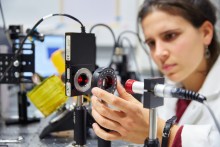
    NanoGUNE ofrece 4 becas a los estudiantes del Máster en Nanociencia y del Máster en Nuevos Materiales de la UPV/EHU que elijan desarrollar su tesis de máster dentro de uno de los grupos de investigación de nanoGUNE.

  • Becas nanoGUNE: abierta la convocatoria para los estudiantes de máster

    NanoGUNE ofrece 4 becas a los estudiantes del Máster en Nanociencia y del Máster en Nuevos Materiales de la UPV/EHU que elijan desarrollar su tesis de máster dentro de uno de los grupos de investigación de nanoGUNE.

  • Becas nanoGUNE: abierta la convocatoria para los estudiantes de máster

    NanoGUNE ofrece 4 becas a los estudiantes del Máster en Nanociencia y del Máster en Nuevos Materiales de la UPV/EHU que elijan desarrollar su tesis de máster dentro de uno de los grupos de investigación de nanoGUNE.

  • Becas nanoGUNE: abierta la convocatoria para los estudiantes de máster

    NanoGUNE ofrece 4 becas a los estudiantes del Máster en Nanociencia y del Máster en Nuevos Materiales de la UPV/EHU que elijan desarrollar su tesis de máster dentro de uno de los grupos de investigación de nanoGUNE.

  • Becas nanoGUNE: abierta la convocatoria para los estudiantes de máster

    NanoGUNE ofrece 4 becas a los estudiantes del Máster en Nanociencia y del Máster en Nuevos Materiales de la UPV/EHU que elijan desarrollar su tesis de máster dentro de uno de los grupos de investigación de nanoGUNE.

  • Becas nanoGUNE: abierta la convocatoria para los estudiantes de máster

    NanoGUNE ofrece 4 becas a los estudiantes del Máster en Nanociencia y del Máster en Nuevos Materiales de la UPV/EHU que elijan desarrollar su tesis de máster dentro de uno de los grupos de investigación de nanoGUNE.

  • Becas nanoGUNE: abierta la convocatoria para los estudiantes de máster

    NanoGUNE ofrece 4 becas a los estudiantes del Máster en Nanociencia y del Máster en Nuevos Materiales de la UPV/EHU que elijan desarrollar su tesis de máster dentro de uno de los grupos de investigación de nanoGUNE.

  • Becas nanoGUNE: abierta la convocatoria para los estudiantes de máster

    NanoGUNE ofrece 4 becas a los estudiantes del Máster en Nanociencia y del Máster en Nuevos Materiales de la UPV/EHU que elijan desarrollar su tesis de máster dentro de uno de los grupos de investigación de nanoGUNE.

  • Becas nanoGUNE: abierta la convocatoria para los estudiantes de máster

    NanoGUNE ofrece 4 becas a los estudiantes del Máster en Nanociencia y del Máster en Nuevos Materiales de la UPV/EHU que elijan desarrollar su tesis de máster dentro de uno de los grupos de investigación de nanoGUNE.

  • Nanoscale Infrared Near-Field Spectroscopy, PHD thesis by Florian Huth

    Florian Huth, Pre-doctoral Researcher at the Nanooptics Group at nanoGUNE, receives his PhD at the University of the Basque Country (UPV/EHU) after the defense of his thesis project on Monday 25 May 2015. Hir research work, entitled Nanoscale Infrared Near-Field Spectroscopy", has been developed under the...

  • La investigadora del CIC nanoGUNE Estitxu Villamor ha obtenido una mención especial en los Premios CAF-Elhuyar

    La investigadora Estitxu Villamor, que ha realizado su tesis doctoral en el grupo de Nanodispositivos de nanoGUNE, ha recibido el diploma de mención especial en los Premios CAF-Elhuyar. El objeto de estos premios es fomentar, premiar y reconocer la divulgación, el periodismo y la socialización de temas e...

  • Aspargi, Inbiomed y nanoGUNE trabajan juntos contra el Parkinson

    Aspargi, la Asociación Parkinson Gipuzkoa (País Vasco), ha apoyado con una beca de 6.000€ un proyecto de investigación conjunta entre Inbiomed y nanoGUNE, que desarrolla mejores formas de generar neuronas para así poder investigar los mecanismos de la enfermedad y encontrar nuevos tratamientos.

  • “Nanostructuring of Devices for Nanoscience Applications”, PhD Thesis by Libe Arzubiaga

    Libe Arzubiaga, Pre-doctoral Researcher at the Nanodevices Group at nanoGUNE, receives her PhD at the University of the Basque Country (UPV/EHU) after the defense of her thesis project on Monday 16 March 2015. Her research work, entitled “Nanostructuring of Devices for Nanoscience Applications”, has been developed...

  • Marco Gobbi galardonado con el premio a la Mejor Tesis Experimental

    Normal 0 false false false EN-US JA X-NONE

    DefSemiHidden="true" DefQFormat="false" DefPriority="99" LatentStyleCount="276"> UnhideWhenUsed...

  • "Electrospinning of Biomolecules", PhD Thesis by Wiwat Nuansing

    Wiwat Nuansing, Pre-doctoral Researcher in the Self-Assembly Group at nanoGUNE, received his PhD at the University of the Basque Country (UPV/EHU) after the defense of his thesis project on Monday 23 June 2014. He carried out his research work, entitled Electrospinning of Biomolecules, under the supervision of Dr....

  • CTECHnano, soluciones “a la carta” para la industria

    La nueva empresa CTECHnano, creada por iniciativa de CIC nanoGUNE, desarrolla nuevas soluciones para la industria  La tecnología ALD (Atomic Layer Deposition) permite cambiar las propiedades de los materiales  Esta tecnología puede aplicarse siempre que se necesitan propiedades específicas en un material
  • "Electrospinning of Biomolecules", PhD Thesis by Wiwat Nuansing

    Wiwat Nuansing, Pre-doctoral Researcher in the Self-Assembly Group at nanoGUNE, received his Doctor Degree at the University of the Basque Country (UPV/EHU) after the defense of his thesis project on Monday 23 June 2014. He carried out his research work, entitled Electrospinning of Biomolecules, under the...

  • "Injection, Transport, and Manipulation of Pure Spin Currents in Metallic Lateral Spin Valves", PhD Thesis by Estitxu Villamor Lomas

    Estitxu Villamor, Pre-doctoral Researcher at the Nanodevices Group at nanoGUNE, receives her PhD at the University of the Basque Country (UPV/EHU) after the defense of her thesis project on Monday 15 December 2014. Her research work, entitled “Injection, Transport, and Manipulation of Pure Spin Currents in Metallic...

  • ETP Nanomedicine Annual Event 2014

    NanoGUNE hosts more than 120 experts in nanotechnology and medicine at the 2014 Annual Event & General Assembly of the European Technology Platform on Nanomedicine (ETPN). The ETPN event has taken place on 15 and 16 October 2014, co-organized by the nanoBasque Agency (SPRI) and nanoGUNE, the Basque Nanoscience...

  • ETP Nanomedicine Annual Event 2014

    NanoGUNE hosts more than 120 experts in nanotechnology and medicine at the 2014 Annual Event & General Assembly of the European Technology Platform on Nanomedicine (ETPN). The ETPN event has taken place on 15 and 16 October 2014, co-organized by the nanoBasque Agency (SPRI) and nanoGUNE, the Basque Nanoscience...

  • ETP Nanomedicine Annual Event 2014

    NanoGUNE hosts more than 120 experts in nanotechnology and medicine at the 2014 Annual Event & General Assembly of the European Technology Platform on Nanomedicine (ETPN). The ETPN event has taken place on 15 and 16 October 2014, co-organized by the nanoBasque Agency (SPRI) and nanoGUNE, the Basque Nanoscience...

  • Rainer Hillenbrand, Premio Ludwig-Genzel 2014

    Rainer Hillenbrand lidera, desde 2008, el grupo de Nanoóptica de CIC nanoGUNE, centro de investigación de nanociencia del País Vasco Ha sido premiado por “el diseño y desarrollo de la espectroscopia infrarroja de campo cercano y la aplicación de este nuevo método espectroscópico en diferentes áreas de las...
  • Plasmones del grafeno, una luz para los dispositivos de nueva generación

    Investigadores de CIC nanoGUNE han desarrollado una plataforma tecnológica basada en antenas que permite lanzar y controlar la luz que se propaga a lo largo del grafeno, abriendo nuevas vías para el desarrollo de dispositivos y circuitos fotónicos extremadamente miniaturizados. Demuestran que la luz atrapada...
  • "Polythiophene-based nanoscale lateral devices", PhD thesis by Thales V. A. G. de Oliveira

    Thales de Oliveira, Pre-doctoral Researcher at the Self-Assembly Group at nanoGUNE, received his PhD at the University of the Basque Country (UPV/EHU) after the defense of his thesis project on Friday 23 May 2014. His research work, entitled “Polythiophene-based nanoscale lateral devices”, has been developed under...

  • Plasmones del grafeno, una luz para los dispositivos de nueva generación

    Investigadores de CIC nanoGUNE han desarrollado una plataforma tecnológica basada en antenas que permite lanzar y controlar la luz que se propaga a lo largo del grafeno, abriendo nuevas vías para el desarrollo de dispositivos y circuitos fotónicos extremadamente miniaturizados. Demuestran que la luz atrapada...
  • "Polythiophene-based nanoscale lateral devices", PhD thesis by Thales V. A. G. de Oliveira

    Thales de Oliveira, Pre-doctoral Researcher at the Self-Assembly Group at nanoGUNE, received his PhD at the University of the Basque Country (UPV/EHU) after the defense of his thesis project on Friday 23 May 2014. His research work, entitled “Polythiophene-based nanoscale lateral devices”, has been developed under...

  • "Resistive switching in Hafnium oxide", PhD thesis by Raul Zazpe

    Raul Zazpe, Pre-doctoral Researcher at the Nanodevices Group at nanoGUNE, received his PhD at the University of the Basque Country (UPV/EHU) after the defense of his thesis project on Wednesday 30 April 2014. His research work, entitled “Resistive switching in Hafnium oxide”, has been developed under the...

  • Two-Dimensional Programmable Manipulation of Magnetic Nanoparticles on-Chip

    Researchers from the Nanomagnetism Group at nanoGUNE have developed a novel device for on-chip selective trap and two-dimensional remote manipulation of single and multiple fluid-borne magnetic particles using field controlled magnetic domain walls in circular nanostructures. The combination of differently shaped...

  • El infrarrojo arroja luz sobre complejos de proteínas individuales

    La técnica nano-FTIR supera el límite de difracción en la bioespectroscopia infrarroja La innovadora técnica analiza la estructura secundaria de los complejos de las proteínas individuales
  • Pauso berri bat konputazio kuantikorantz

    96

    Normal 0 false false false EN-US JA X-NONE

    DefSemiHidden="true" DefQFormat="false" DefPriority="99" LatentStyleCount="276"> UnhideWhenUsed="...

  • Journal of Optics: Special issue on graphene nanophotonics

    nanoGUNE’s researcher Alexey Nikitin, in collaboration with researchers from the Imperial College (London) and the University of Zaragoza (Spain), has participated as a “guest editor” in the Special Issue on Graphene Nanophotonics published by Journal of Optics. The Special Issue focuses on the emerging Graphene...

  • Magnetization reversal behavior of ferromagnetic thin films and nano-structures

    On Friday 27 September, nanoGUNE’s pre-doctoral researcher Olatz Idigoras received her doctoral Degree at the University of the Basque Country (UPV/EHU) with a thesis entitled “Magnetization reversal behavior of ferromagnetic thin films and nano-structures”

  • La Fuerza de las proteínas: Hacia una nueva biología

    El Grupo de Nanobiomecánica de CIC nanoGUNE estudia la evolución de proteínas resucitadas de más de 4.000 millones de años

    Investiga los efectos de las fuerzas mecánicas en proteínas implicadas enenfermedades como las infecciones víricas y bacterianas o el infarto de miocardio

    Uno de los...

  • Una ventana a lo invisible

    El Grupo Nanoimaging de CIC nanoGUNE muestra sus tres microscopios singulares capaces de ver y manipular átomos  Uno de ellos es el único en el mundo que permite medir propiedades electrónicas, mecánicas y ópticas a escala atómica  La investigación llevada a cabo por el grupo busca sentar las bases para la...
  • 2nd nanoIKER Workshop

    The 2nd nanoIKER Workshop took place at Tecnalia Headquarters in the Science & Technology Park of Bizkaia on June 10, 2013.

  • 2nd nanoIKER Workshop

    The 2nd nanoIKER Workshop took place at Tecnalia Headquarters in the Science & Technology Park of Bizkaia on June 10, 2013.

  • “Spintronic devices based on fullerene C60”, PhD Thesis defended by Marco Gobbi

    Marco Gobbi, Pre-doctoral researcher at the Nanodevices Group, got his Doctor Degree at the University of The Basque Country (UPV/EHU) after the defense of his thesis project on Friday 24 May 2013. His research work achieved the maximum qualification (cum laude) after the defense and assessment of his work by an...

  • CIC nanoGUNE lanza Simune, un servicio de simulación a escala atómica dirigido a empresas

    Simune ayudará a las empresas a resolver problemas tecnológicos ahorrando tiempo y costes

    El grupo de Teoría de nanoGUNE será el responsable del servicio, que estará enfocado inicialmente al sector energético y de la electrónica

  • Review on diffusion phenomena in ALD, highlighted by Semiconductor Science and Technology

    Semiconductor Science and Technology has selected Mato Knez’s review on Diffusion phenomena in Atomic Layer Deposition (ALD) as a highlight of 2012. The magazine’s annual selection by the Editorial Board “represents the breadth and excellence of the work published in 2012. All articles were selected for their...

  • Nanotechnology: Electron beam lithography scheme suits tobacco mosaic virus

    Nanotechnology highlights nanoGUNE’s Self-Assembly Group’s research as the “Publisher’s Pick”. A feature about the original paper has been published at the “Lab talk” section and an interview to José María Alonso has been included.

  • New technology in the magnetic cooling of chips

    A team of CIC nanoGUNE researchers has participated in the development of a new technology that will enable the environmental impact to be minimized. The work has been published in the prestigious journal Nature Materials.

  • New technology in the magnetic cooling of chips

    A team of CIC nanoGUNE researchers has participated in the development of a new technology that will enable the environmental impact to be minimized. The work has been published in the prestigious journal Nature Materials.

  • Mato Knez: "Nanomaterials with practical applications in the Basque industry"

    [Published at www.nanobasque.eu] Technology has evolved so much recently that Basque consumers take for granted that within a few years they will be able to purchase televisions, tablets and computers with ultrafine flexible screens that will be able to be rolled up.

  • Waveguides: Bottom-Up Tailoring of Plasmonic Nanopeapods Making Use of the Periodical Topography of Carbon Nanocoil Templates

    The journal Advanced Functional Materials (Wiley VCH) has highlighted the article published by Q. Yong et al. (Adv. Funct. Mater. 2012, 22, 5157; DOI: 10.1002/adfm.201201791) on the back cover of their current issue. The published work is the result of an international collaboration of nanoGUNE’s Nanomaterials...

  • SMALL: Enhanced Catalytic Activity for Methanol Electro-oxidation

    The Nanomaterials research group at nanoGUNE, led by Dr. Mato Knez, in collaboration with scientists from the Chinese Academy of Sciences and the Max Plank Institute of Microstructure Physics, describes in a recent article [ X. Tong et al., Small, 8, 22, 3390 (2012)] the results of a collaborative study on the high...

  • Crystallography drives Exchange Bias in epitaxial Co/CoO bilayer films

    In a recent article, published in Physical Review Letters (PRL 109, 177205 (2012)) researchers from the Nanomagnetism group and Electron-Microscopy laboratory at nanoGUNE have reported on the crystallography-driven appearance of positive exchange bias in epitaxial Co/CoO bilayers.

  • Crystallography drives Exchange Bias in epitaxial Co/CoO bilayer films

    In a recent article, published in Physical Review Letters (PRL 109, 177205 (2012)) researchers from the Nanomagnetism group and Electron-Microscopy laboratory at nanoGUNE have reported on the crystallography-driven appearance of positive exchange bias in epitaxial Co/CoO bilayers.

  • Science: Converting 'noise' into mechanical energy on the nanoscale

    Scientists of the Freie Universität Berlin demonstrate it is possible to use the energy of a moving hydrogen molecule to power up a “mechanical machine”. The work, led by Jose Ignacio Pascual (currently leader of the Nanoimaging Group at nanoGUNE), has been published in the prestigious journal Science (Science, DOI...

  • Nature Communications: Correlative infrared-electron nanoscopy

    A new nanoimaging method for resolving the interplay between local structure, conductivity, and chemical composition

  • Nature Communications: Correlative infrared-electron nanoscopy

    A new nanoimaging method for resolving the interplay between local structure, conductivity, and chemical composition

  • Nature Communications: Correlative infrared-electron nanoscopy

    A new nanoimaging method for resolving the interplay between local structure, conductivity, and chemical composition

  • Nacho Pascual, Nanoimaging Group Leader at nanoGUNE

    Starting on 1 September, Nacho Pascual, Professor of Physics at the Free University in Berlin (Germany), has taken on his new responsibility as Ikerbasque Research Professor and Leader of the Nanoimaging Group at nanoGUNE. Nacho’s research is focused on the physics of surfaces and molecules investigated by low...

  • Nature: Optical nano-imaging of gate-tunable graphene plasmons

    In a recent article (Nature, DOI: 10.1038/nature11254) researchers from the nanooptics group at nanoGUNE, in collaboration with researchers from ICFO and IQFR-CSIC, report the launch and detection of propagating optical plasmons in tapered graphene nanostructures using near-field scattering microscopy with infrared...

  • PRL Cover: "Nonadiabatic Forces in Ion-Solid Interactions: The Initial Stages of Radiation Damage”

    In a recent article a collaborative research team, including nanoGUNE’s Theory Group Leader Emilio Artacho and researchers from the Center of Materials Physics and the Donostia International Physics Center in the same campus, has studied the radiation damage processes beyond the Born-Oppenheimer approximation using...

  • Mato Knez receives Gaede Prize

    Mato Knez, leader of the Nanomaterials Group at nanoGUNE and Ikerbasque Research Professor, received the Gaede Prize of the German Vacuum Society at the annual meeting of the German Physical Society (DPG) in Berlin on March 27th, 2012. The award was issued for his outstanding contributions to the research on and...

  • “Infrared Nanophotonics based on Metal Antennas and Transmission Lines” NanoGUNE's first PhD Thesis defended by Martin Schnell

    Martin Schnell, Pre-doctoral researcher at the Nanooptics Group, got his Doctor Degree at the University of The Basque Country (UPV/EHU) after the defense of his thesis project last Monday 19 March. His research work achieved the maximum qualification (cum laude) after the defense and assessment of his work by an...

  • Nature Communications: Resolving the electromagnetic mechanism of surface-enhanced light scattering at single hot spots

    In a recent article (P. Alonso-González, et al., Nat. Commun. 3, 684) researchers from the nanooptics and the nanodevices groups at nanoGUNE provide experimental evidence that the intensity elastically scattered off the object scales with the fourth power of the local field enhancement provided by the antenna, and...

  • Nature Communications: Resolving the electromagnetic mechanism of surface-enhanced light scattering at single hot spots

    In a recent article (P. Alonso-González, et al., Nat. Commun. 3, 684) researchers from the nanooptics and the nanodevices groups at nanoGUNE provide experimental evidence that the intensity elastically scattered off the object scales with the fourth power of the local field enhancement provided by the antenna, and...

  • Mato Knez, new nanoGUNE Nanomaterials Group Leader

    Starting on 1 January, Dr. Mato Knez, coming from the Max Planck Institute of Microstructure Physics in Halle (Germany), has taken on his new responsibilities as Ikerbasque Research Professor and Leader of the Nanomaterials Group at nanoGUNE.

  • Nanooptics article winner in the CeNS Publication Award 2011

    The article “Infrared-Spectroscopic Nanoimaging with a Thermal Source” a collaborative work between researchers of the nanooptics groups and Neaspec GmbH has been awarded the Publication Award 2011 from the Center for NanoScience in Munich for their work on near-field spectroscopy with a thermal source (more info...

  • Nanotechweb: new property of nanoscale metallic ferromagnets

    As reported in nanotechweb, researchers at nanoGUNE and Chalmers University have discovered a fundamentally new property in nanoscale ferromagnetic nanoantennas – their ability to control the sign of rotation of polarized scattered light. This “Kerr rotation reversal” effect arises from the interplay between...

  • NanoGUNE awarded in the Raith Micrograph Award 2011

    The micrograph of a lateral spin valve with integrated dielectric mask, which was obtained by the Ph.D. student Thales de Oliveira from the Self-Assembly Group, has been awarded the second prize of the Raith Micrograph Award 2011. Raith is one of the world-leading suppliers of innovative solutions for...

  • NanoGUNE awarded in the Raith Micrograph Award 2011

    The micrograph of a lateral spin valve with integrated dielectric mask, which was obtained by the Ph.D. student Thales de Oliveira from the Self-Assembly Group, has been awarded the second prize of the Raith Micrograph Award 2011. Raith is one of the world-leading suppliers of innovative solutions for...

  • Symposium on nanomagnetism co-organized by nanoGUNE

    Dr. Andreas Berger, nanoGUNE Research Director and leader of the nanomagnetism group, co-organizes New Trends and Developments in Nanomagnetism, a symposium that will be celebrated in the framework of the Spring Meeting 2012 of the Materials Research Society. This symposium is focusing on recent trends in nanoscale...

  • NanoGUNE installs a new High-Performance Computing Cluster

    The new facility, with a processing power of 6220.8 GFLOPS and 1800 GB RAM, will be devoted mainly to nanosystems simulations performed by the newly created Theory Group at nanoGUNE led by Emilio Artacho.

  • Emilio Artacho, new nanoGUNE Theory Group Leader

    Starting on 1 October, Prof. Emilio Artacho, coming from the University of Cambridge, has taken on his new responsibilities as Ikerbasque Research Professor and Leader of the Theory Group at nanoGUNE.

  • Nature Materials: Self-assembly of a graphene nanoribbon within a carbon nanotube

    A new strategy for spontaneous self-assembly of Graphene NanoRibbons (GNRs) using a Single-Walled carbon nanotube (SWNT) as both the reaction vessel and the template for nanoribbon growth has been reported in a recent article by researchers from nanoGUNE and from the Universities of Nottingham and Ulm (A. Chuvilin...

  • Nature Materials: Self-assembly of a graphene nanoribbon within a carbon nanotube

    A new strategy for spontaneous self-assembly of Graphene NanoRibbons (GNRs) using a Single-Walled carbon nanotube (SWNT) as both the reaction vessel and the template for nanoribbon growth has been reported in a recent article by researchers from nanoGUNE and from the Universities of Nottingham and Ulm (A. Chuvilin...

  • SMALL: Plasmonic Nickel Nanoantennas

    In a recent article (J.Chen at al., Small, doi: 10.1002/smll.201100640) researchers from nanoGUNE have studied the fundamental optical properties of pure nickel nanoantennas. The article has been featured on the cover of the SMALL journal (Volume 7, Issue 16) and on the materials science news site Materials Views...

  • Nature Materials: Nano-FTIR – Nanoscale Infrared Spectroscopy with a Thermal Source

    Researchers from the nanoscience research center CIC nanoGUNE (San Sebastián, Spain) and Neaspec GmbH (Martinsried, Germany) have developed an instrument that allows for recording infrared spectra with a thermal source at a resolution that is 100 times better than in conventional infrared spectroscopy. In future,...

  • Nature Photonics: Transmission Lines for Nanofocusing of Infrared Light

    A joint cooperation between three research groups at nanoGUNE reports an innovative method to focus infrared light with tapered transmission lines to nanometer-size dimensions. This device could trigger the development of novel chemical and biological sensing tools, including ultra-small infrared spectrometers and...

  • Nature Photonics: Transmission Lines for Nanofocusing of Infrared Light

    A joint cooperation between three research groups at nanoGUNE reports an innovative method to focus infrared light with tapered transmission lines to nanometer-size dimensions. This device could trigger the development of novel chemical and biological sensing tools, including ultra-small infrared spectrometers and...

  • Nature Materials: High Resolution TEM reveals chemical bonds

    The combination of HRTEM experiments and first-principles electronic structure calculations opens a new way to investigate electronic configurations of point defects, other non-periodic arrangements or nanoscale objects that cannot be studied by an electron or X-ray diffraction analysis. In the article published in...

  • NanoGUNE and FEI collaborate on Advanced Electron-Microscopy Laboratory

    An Environmental Scanning Electron Microscope (ESEM) and a Dual-Beam Focused Ion Beam (FIB) nanofabrication tool have been installed at nanoGUNE’s Advanced Electron Microscopy Laboratory. The purchase of these already-functional tools and a still-to-come spherical-aberration corrected high-resolution Transmission...

  • Nanodevices Group in Nature Physics

    Luis Hueso, leader of the nanodevies group at nanoGUNE, has collaborated in a research project on organic spintronics led by CNRS/Thales. The most recent results of this collaboration have been published in Nature Physics in June 2010 in the article Unravelling the role of the interface for spin injection into...

  • Electron Microscopy Laboratory build-up

    For the purpose of building up a world-class Electron Microscopy facility, CIC nanoGUNE announces a recent agreement with FEI Company that includes the purchase of several high-end electron microscopes including TEM/STEM, Dual Beam FIB, and ESEM.

Agenda